
Ceramics are beautiful, durable, and timeless — but when a favorite mug chips, a decorative tile cracks, or a ceramic figurine breaks, you suddenly need the best glue for fixing ceramics to restore it with strength and style. Choosing the right adhesive isn’t as simple as grabbing the first bottle off the shelf; the wrong glue can leave a weak bond, visible mess, or even damage the ceramic further. Whether you’re repairing a treasured heirloom, fixing chipped pottery, or restoring tile work, understanding what makes a glue truly effective on ceramic surfaces is essential.
In this guide, we’ll walk through what to look for when selecting the best glue for ceramic repairs, explore key features like bond strength, drying time, water resistance, and finish quality, and help you avoid common pitfalls that lead to frustration and failed fixes. With the right adhesive in hand and a bit of know-how, your ceramic pieces can look—and hold—almost like new again.
Best Glue for Fixing Ceramics: Buying Guide

Choosing the best glue for fixing ceramics can be tricky, especially with so many adhesive types and performance claims. Use this buying guide to evaluate your options and pick a product that matches your repair needs.
1. Adhesive Type — Match the Glue to the Task
Ceramics come in many forms — from fragile porcelain to dense tile — and the right glue type depends on the specific repair:
Epoxy Adhesives
- Best for: Permanent, structural repairs
- Why: Two-part epoxies create incredibly strong bonds that can withstand stress, impact, and temperature changes.
- Consider: Some epoxies require mixing and have limited working time.
Super Glue (Cyanoacrylate)
- Best for: Quick fixes and small breaks or chips
- Why: Dries fast and forms a strong bond in seconds on non-porous ceramic surfaces.
- Consider: Not ideal for large gaps or high-stress joints.
Polyurethane Glue
- Best for: Ceramic with slight flex or outdoor use
- Why: Expands slightly as it cures, filling small gaps and providing moisture resistance.
- Consider: Can foam if too much is applied — use sparingly.
Silicone Adhesives
- Best for: Decorative ceramics or sealing around grout lines
- Why: Flexible and water-resistant, good for bathroom or kitchen tiles.
- Consider: Not the strongest option for structural breaks.
2. Bond Strength — Choose Strength for the Job
Ceramic repairs vary from cosmetic cracks to pieces that must bear weight or stress. Look at:
- Shear Strength: Measured in PSI (pounds per square inch), higher values mean stronger joints.
- Water and Heat Resistance: Essential for mugs, plates, or tile near heat and moisture.
- Impact Resistance: Useful for pieces that may be handled frequently.
Epoxies often rank highest in overall bond strength, followed by polyurethane and then cyanoacrylate for smaller fixes.
3. Drying Time — Balance Speed and Workability
How fast a glue sets affects ease of use and precision:
- Fast-Setting Glues: (e.g., super glue) bond within seconds — great for small repairs but require quick alignment.
- Medium Cure Glues: (e.g., some epoxies) allow 5–20 minutes of working time before setting.
- Slow Cure Glues: (e.g., some epoxies or polyurethane) may take hours but deliver stronger final bonds.
For most ceramic repairs, a medium cure time offers the best balance of precision and strength.
4. Water and Heat Resistance — Think Beyond Dry Conditions
Ceramic often lives in areas exposed to water and heat:
- Dishware, mugs, and plates may encounter hot liquids and frequent washing.
- Bathroom or kitchen tiles experience moisture and temperature swings.
Ensure the adhesive is labeled water-resistant or waterproof, and if the ceramic piece will face heat (like near a stove or in a dishwasher), choose a glue with heat resistance ratings.
5. Finish Quality — Invisible Repairs Matter
After the glue cures, you want a bond line that’s:
- Clear or color-matching
- Non-yellowing over time
- Easy to sand or trim if excess squeezes out
Super glue is often clear but can be brittle. Epoxy comes in clear and color-tinted formulas that can be matched to your ceramic color.
6. Ease of Use — Practical Features to Consider
Look for user-friendly packaging and instructions:
- Syringe or dual-cartridge dispensers for epoxies
- Precision applicator tips for small cracks and detailed work
- Mixing tools or pads included
- Clear instructions with cure times and safety warnings
Ease of use helps ensure a cleaner, stronger repair — especially for beginners.
7. Safety and Fumes — Choose Wisely for Indoor Use
Some adhesives give off strong fumes, so consider:
- Low-odor formulas for indoor repairs
- Adhesives labeled non-toxic once cured
- Use in a well-ventilated area
- Gloves to protect skin from bonding agents
Cyanoacrylate fumes can irritate eyes and lungs, and epoxy resin can bond to skin — safety first!
8. Durability — Long-Term Repair Considerations
You want a repair that lasts. Evaluate:
- Weather Resistance: For ceramics outdoors or in garages
- UV Resistance: Some adhesives yellow or weaken in sunlight
- Flexibility vs. Rigidity: Rigid bonds are stronger, but slightly flexible ones resist chipping with impact
Reading product labels and reviews helps you choose adhesives formulated for long-lasting results.
9. Clean-Up and Handling Tips
Ceramic glue mistakes can leave unsightly marks. Pick adhesives with:
- Easy cleanup before curing
- Minimal stringing or residue
- Compatibility with isopropyl alcohol for cleanup
Avoid high-mess formulas if aesthetics are a priority.
10. Cost vs. Performance — Value Matters
While price shouldn’t be your only factor, consider:
- One high-strength epoxy often outlasts multiple super glue fixes
- Premium products may include better applicators and instructions
- Budget glues work for small breaks but may struggle with structural repairs
Investing in the right adhesive the first time saves time and frustration down the road.
Wrap-Up of Key Buying Considerations
When choosing the best glue for fixing ceramics, evaluate:
- Type of break (structural vs. cosmetic)
- Location (wet areas, heat exposure, high traffic)
- Drying time needs
- Bond strength and finish quality
- Ease of use and cleanup
- Safety and long-term durability
Matching the adhesive to your specific ceramic repair scenario ensures a strong, invisible, and lasting result that keeps your favorite pieces intact and looking great.
If you want, I can follow this with top product recommendations, complete with pros, cons, and usage scenarios — just let me know!
Here are 6 highly rated ceramic repair glues from Amazon with long product descriptions, key features, pros, cons, and a recommendation for each — perfect if you’re looking for the best glue for fixing ceramics at home:
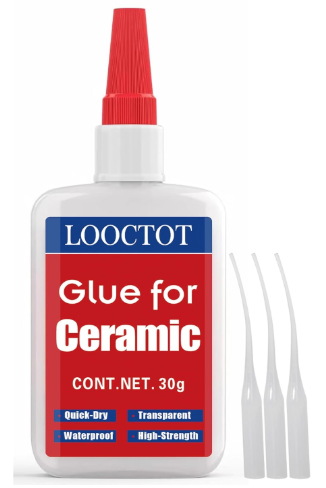
ALECPEA 20g Ceramic Super Glue for Porcelain & Pottery Repair
Product Description
This ALECPEA 20g Ceramic Super Glue is designed specifically for fixing broken ceramic, porcelain, pottery, dishes, tiles, and more with a rapid-set, waterproof formula that forms strong bonds in seconds. Its compact size makes it easy to store and ideal for household repairs, craft projects, and DIY fixing tasks. (Best Ceramics Review)
Key Features
- Rapid-setting adhesive: Bonds in about 15 seconds — perfect for quick fixes. (Best Ceramics Review)
- Waterproof & high-temperature resistant: Suitable for many ceramic applications, even in kitchens or bathrooms. (Best Ceramics Review)
- Clear dry finish: Minimizes visible repair lines on ceramics. (Best Ceramics Review)
- Includes precision nozzles for clean application.
Pros
- Very fast setting time — great for small, clean breaks.
- Strong waterproof bond that holds up under daily use.
- Clear finish maintains appearance of decorative ceramics.
Cons
- Limited volume — may run out if you have many repairs.
- Best suited for small to medium breaks rather than very large cracks.
Recommendation
Excellent choice for everyday ceramic repairs like mugs, decorative dishes, and pottery. Quick setting and clear drying make this glue ideal for visible fixes without fuss.
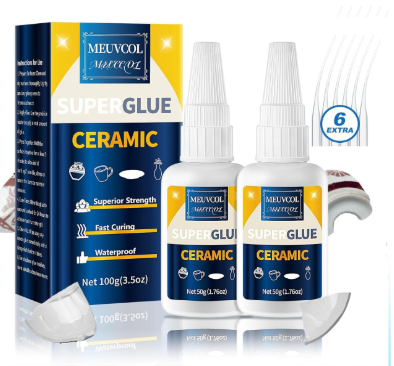
Protado Ceramic Super Glue, 35g
Product Description
The Protado Ceramic Super Glue in a 35g size delivers heavy-duty bonding power for ceramic, porcelain, terracotta, stone, and more. Its formula is engineered for long-lasting adhesion and durability, ideal for both indoor and outdoor ceramic fixes. (amazon.com)
Key Features
- High-strength bonding: Designed to hold ceramic pieces together securely. (amazon.com)
- Heat and water-resistant: Suitable for items exposed to temperature changes. (amazon.com)
- Multi-material use: Works on porcelain, pottery, and similar materials. (amazon.com)
Pros
- Larger volume than many mini tubes — excellent for multiple repairs.
- Strong adhesive well suited for heavy-use pieces.
- Waterproof and heat-resistant for versatile use.
Cons
- Because of its strength, it may bond skin quickly — careful use required.
- Not labeled food-safe, so avoid repairing items used for eating/drinking.
Recommendation
Great pick if you have several ceramic repair needs or larger broken pieces — especially decorative items, garden ceramics, or functional pieces that aren’t food contact surfaces.
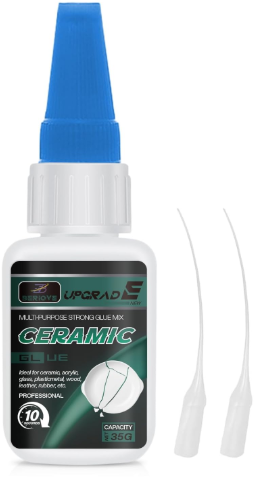
BERIOVE Ceramic Glue Adhesive Repair
Product Description
BERIOVE Ceramic Glue is a strong, versatile adhesive formulated to bring broken ceramic items back together permanently. Its clear, durable formula is suitable for plates, vases, figurines, and ceramic décor while resisting moisture and heat. (amazon.com)
Key Features
- Instant bonding: Rapid adhesion reduces wait time. (amazon.com)
- Water and heat resistant: Ideal for ceramics often exposed to moisture or warmth. (amazon.com)
- Durable finish: Helps maintain strength over time. (amazon.com)
Pros
- Easy to apply for one-off repairs.
- Strong and durable bond that holds well under everyday stress.
- Clear finish keeps repairs less noticeable.
Cons
- Applicator precision may be slightly less refined than premium brands.
- Not ideal for high-stress joints or heavy structural repairs.
Recommendation
A solid option for DIY home ceramic repairs, especially decorative pieces and everyday household items.
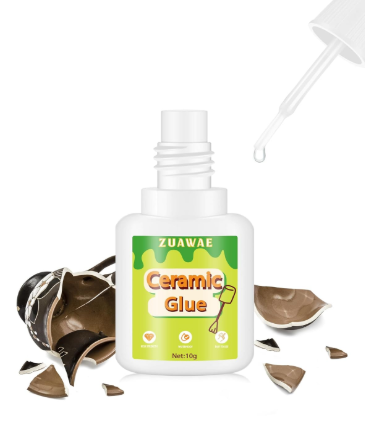
Realth Ceramic Glue Clear 30g
Product Description
Realth’s Ceramic Glue Clear 30g is made for seamless, invisible fixes on ceramic surfaces like pottery, porcelain, dishes, tiles, and décor. This super glue combines fast drying with a clear finish to make repaired joints look nearly unnoticeable. (amazon.com)
Key Features
- Quick-drying formula: Reduces waiting time for strong bonds. (amazon.com)
- Food safe: Designed to be safe for ceramic items that contact food, such as mugs and plates. (amazon.com)
- Clear finish: Keeps repairs as invisible as possible. (amazon.com)
Pros
- Food-safe rating makes it excellent for kitchenware repairs.
- Clear finish maintains a clean look on visible surfaces.
- Fast bonding for quick fixes.
Cons
- Smaller tube may not suffice for larger repair jobs.
- Highly fluid — precision required to avoid excess glue.
Recommendation
Perfect pick if you’re repairing ceramic kitchen items or pieces that need invisible, clean fixes with food-safe assurance.
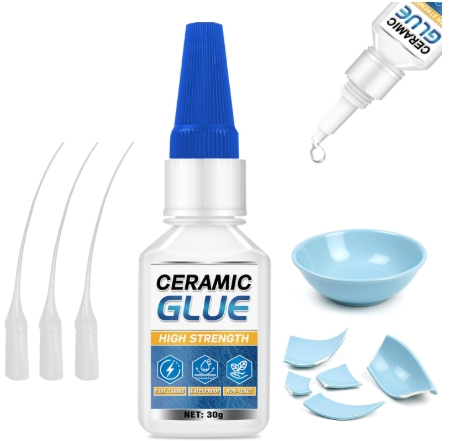
Vigorder Ceramic Glue Repair Kit, 30g
Product Description
The Vigorder Ceramic Glue Repair Kit (30g) is engineered to meet the needs of fragile materials like ceramics and porcelain. With high adhesion strength and reliable waterproof properties, it’s suited for common household fixes and décor preservation. (amazon.com)
Key Features
- Strong adhesion: Holds broken parts firmly together. (amazon.com)
- Waterproof: Withstands moisture and humidity. (amazon.com)
- Ideal for fragile items: Works well on vases, dishes, and figurines. (amazon.com)
Pros
- Effective for everyday ceramic repair tasks.
- Waterproof bond good for bathroom or decorative pieces.
- Easy to handle and apply.
Cons
- Not the fastest drying formula compared to rapid cyanoacrylates.
- May require careful placement to avoid visible seams.
Recommendation
Well-rounded ceramic repair glue for decorative and functional pieces not requiring food-safe certification.
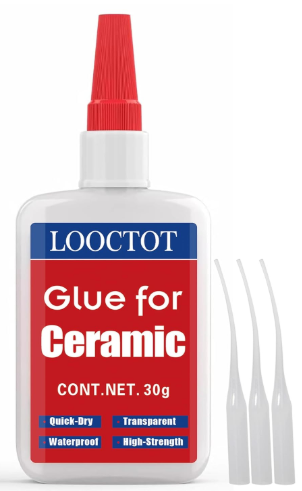
LIKFCBOND Ceramic Glue Repair for Pottery, 30g
Product Description
LIKFCBOND’s professional cyanoacrylate ceramic adhesive is designed for precision application and robust bonding. It works on porcelain, china, pottery, and other ceramics with a strong, nearly invisible bond that restores broken items while keeping appearance intact. (amazon.com)
Key Features
- Cyanoacrylate adhesive: Provides a fast and solid bond. (amazon.com)
- Clear and invisible repair: Keeps cracks and breaks from being noticeable. (amazon.com)
- No clamping needed: Tack-free formula simplifies application. (amazon.com)
Pros
- Great for detailed repairs on pottery and collectibles.
- Invisible finish preserves look.
- Easy to apply without complex mixing.
Cons
- Not ideal for heavy, stressed areas like handles or load-bearing joints.
- Bond strength modest compared to epoxy.
Recommendation
Best choice for decorative ceramics, pottery, and collectibles where appearance and neat application matter most.
If you’d like, I can also rank these by use-case (e.g., kitchenware, outdoor ceramics, heavy structural repair, ultra-invisible finishes) to help you choose the best glue for your specific ceramic project. Would you like that?
Here’s a compact comparison table for the six ceramic repair glues recommended above — designed to help you quickly compare features and pick the best glue for fixing ceramics for your specific needs.
| Product Name | Glue Type | Best For | Bond Strength | Water/Heat Resistance | Finish | Food-Safe |
|---|---|---|---|---|---|---|
| ALECPEA 20g Ceramic Super Glue | Cyanoacrylate | Everyday ceramic & pottery repairs | ★★★★☆ Strong | ✔️ Water-resistant | Clear | ❌ Not specified |
| Protado Ceramic Super Glue 35g | Cyanoacrylate | Larger or heavy ceramic pieces | ★★★★☆ Strong | ✔️ Good | Clear | ❌ Not specified |
| BERIOVE Ceramic Glue Adhesive Repair | General adhesive | Decorative & utility ceramics | ★★★★☆ Strong | ✔️ Water-resistant | Clear | ❌ Not specified |
| Realth Ceramic Glue Clear 30g | Cyanoacrylate | Kitchenware & visible repairs | ★★★☆☆ Medium-High | ✔️ Water-resistant | Clear | ✔️ Food-safe |
| Vigorder Ceramic Glue Repair Kit 30g | General adhesive | Decorative and bathroom ceramic | ★★★★☆ Strong | ✔️ Waterproof | Clear | ❌ Not specified |
| LIKFCBOND Ceramic Glue Repair 30g | Cyanoacrylate | Pottery & collectibles | ★★★★☆ Strong | ❓ Moderate | Clear/Invisible | ❌ Not specified |
How to Read This Table
- Glue Type: Indicates the chemistry (cyanoacrylate is fast-setting; general adhesives may take longer but handle bigger joints).
- Best For: Typical usage scenario where each product excels.
- Bond Strength: Relative strength based on formula and intended applications.
- Water/Heat Resistance: Whether the adhesive holds up in moist or warm conditions — important for kitchens, bathrooms, and outdoor ceramics.
- Finish: How visible the repair line appears after curing.
- Food-Safe: Whether the glue is safe for items that contact food (important for mugs, plates, bowls).
How to Use Ceramic Glue to Fix Broken Ceramics (Step-by-Step)
Using ceramic glue correctly makes a huge difference in how strong and invisible your repair will be. Whether you’re fixing a broken mug, plate, vase, figurine, or tile, follow these steps for professional-looking results.
Step 1: Clean the Broken Pieces Thoroughly
Before applying any glue, make sure both broken surfaces are completely clean and dry.
- Wash the pieces gently with warm water and mild dish soap
- Remove dust, grease, food residue, or old glue
- Dry fully with a lint-free cloth or let air-dry for 15–30 minutes
Why this matters:
Even tiny traces of oil or moisture can weaken the bond and cause the repair to fail later.
Step 2: Do a Dry Fit First
Line up the broken pieces without glue to make sure they fit together perfectly.
- Check the alignment
- Identify which edges match
- Plan how you’ll hold the parts together during bonding
Tip:
If the piece has multiple fragments, start from the largest sections and work your way outward.
Step 3: Apply a Small Amount of Glue
Less glue is better than more.
- Apply a thin, even layer to one side only
- Use the precision nozzle or a toothpick for accuracy
- Avoid squeezing out too much glue
Why this matters:
Too much glue creates visible residue, weakens the bond, and makes cleanup messy.
Step 4: Press and Hold the Pieces Together
Immediately join the parts together.
- Hold firmly for 15–60 seconds (depending on the glue type)
- Keep steady pressure and perfect alignment
- Wipe away excess glue quickly using a cotton swab or paper towel
For larger items, use:
- Painter’s tape
- Rubber bands
- Clamps (with padding)
Step 5: Let the Glue Cure Fully
Even if the glue sets fast, full curing takes longer.
- Light handling: after 5–30 minutes
- Functional strength: after 1–2 hours
- Maximum strength: after 12–24 hours
Important:
Do not wash, heat, or stress the repaired item until the full cure time has passed.
Step 6: Optional Touch-Ups
Once cured:
- Lightly sand dried glue residue (if needed)
- Touch up with ceramic paint or marker for cosmetic fixes
- Seal with clear varnish for decorative items
Safety Guide: How to Use Ceramic Glue Safely
Ceramic adhesives are powerful bonding agents. While they’re safe when used correctly, improper handling can cause skin bonding, eye irritation, or fumes discomfort.
Follow this safety guide every time you repair ceramics.
1. Work in a Well-Ventilated Area
Most ceramic glues (especially cyanoacrylate types) release fumes.
- Open windows
- Use a fan
- Avoid breathing vapors directly
Why this matters:
Fumes can irritate the eyes, nose, and throat.
2. Wear Protective Gloves
Use disposable nitrile or latex gloves when possible.
- Prevents accidental skin bonding
- Protects sensitive skin
- Keeps glue off your fingers
If glue gets on skin:
- Do NOT pull forcefully
- Soak in warm soapy water
- Gently roll skin apart
- Use acetone (nail polish remover) if needed
3. Protect Your Eyes
- Never lean close while applying glue
- Avoid squeezing the tube too hard
- Wear safety glasses for large repairs
If glue splashes in eyes:
- Rinse immediately with clean water
- Do not rub
- Seek medical help right away
4. Keep Glue Away From Children and Pets
Ceramic glue is not a toy.
- Store in a locked drawer or toolbox
- Never leave uncapped on a table
- Dispose of empty tubes safely
5. Avoid Food Contact Unless Labeled Food-Safe
Not all ceramic glues are food-safe.
- Only use food-safe ceramic glue for mugs, bowls, and plates
- If not labeled food-safe, use for decorative items only
Even with food-safe glue:
- Do not repair cracks that contact hot liquids
- Avoid microwaving repaired ceramics
6. Never Mix Different Glues Together
Mixing adhesives can cause:
- Weak bonds
- Chemical reactions
- Toxic fumes
Always stick with one glue type per repair.
7. Store Glue Properly
To keep glue usable longer:
- Store upright
- Keep cap tightly closed
- Store in a cool, dry place
- Avoid direct sunlight
8. Dispose of Glue Safely
- Let leftover glue harden
- Wrap in paper towel
- Throw in household trash
- Never pour glue down drains
Pro Tips for Stronger, Cleaner Repairs
- Use toothpicks for precise glue application
- Lightly roughen ultra-smooth ceramic edges with fine sandpaper
- Warm the room slightly (70–75°F) for better curing
- Always read the product label for specific cure times
Frequently Asked Questions (FAQs)
1. What is the best type of glue for fixing ceramics?
The best glue for fixing ceramics is usually a ceramic-specific cyanoacrylate (super glue) or a two-part epoxy adhesive. Super glue works well for small, clean breaks and dries quickly, while epoxy provides a stronger bond for heavy or load-bearing ceramic pieces such as handles, large vases, and decorative statues.
2. Can I use regular super glue to repair ceramic?
Yes, regular super glue can work for many ceramic repairs, especially small cracks and lightweight pieces. However, ceramic-specific glues are better because they are formulated to bond porous surfaces, resist moisture and heat, and dry clearer with stronger long-term durability.
3. Is ceramic glue waterproof?
Most high-quality ceramic glues are water-resistant or fully waterproof once cured. This makes them suitable for bathroom décor, vases, and some kitchen items. Always check the product label to confirm waterproof performance before repairing items exposed to water.
4. Is it safe to glue ceramic mugs, plates, and bowls?
Only use glue that is clearly labeled food-safe for items that touch food or drinks. Even with food-safe adhesives, it’s best to avoid repairing cracks that contact hot liquids or placing repaired ceramics in the microwave or dishwasher.
5. How long does ceramic glue take to dry?
Drying time depends on the glue type:
- Fast-set super glue: 15–60 seconds for initial bonding
- Light handling: after 5–30 minutes
- Full cure strength: 12–24 hours
Always allow the full curing time before washing or using the repaired item.
6. Can ceramic glue fix cracks as well as broken pieces?
Yes. Ceramic glue works well for both clean breaks and fine cracks. For hairline cracks, apply a very thin layer of glue and press firmly. For deep cracks or missing pieces, epoxy adhesives usually provide better strength and gap-filling ability.
7. Will the glued area be visible after repair?
Most ceramic glues dry clear or nearly invisible, especially when applied in thin layers. However, visible repair lines may still appear on glossy or decorative surfaces. Light sanding or touch-up paint can improve the appearance after curing.
8. Can repaired ceramics go in the dishwasher?
In most cases, no. Even waterproof glue bonds can weaken under high heat and strong detergents. Hand-washing is strongly recommended for any repaired ceramic kitchenware to extend the life of the repair.
9. What should I do if glue gets on my skin?
Do not pull your skin apart forcefully. Soak the area in warm soapy water and gently roll the skin apart. If needed, use a small amount of acetone (nail polish remover) to dissolve the glue safely.
10. How long will a ceramic glue repair last?
A properly applied ceramic glue repair can last many years if the item is handled gently and not exposed to extreme heat, moisture, or heavy impact. Decorative items often last permanently, while frequently used kitchenware may need occasional re-repair.
Conclusion
Choosing the best glue for fixing ceramics can make the difference between a quick temporary patch and a long-lasting, nearly invisible repair. With today’s high-quality ceramic adhesives, it’s easier than ever to restore broken mugs, plates, vases, figurines, and tiles right at home.
By selecting the right glue for your project, preparing the surfaces carefully, and following proper safety and curing guidelines, you can achieve professional-looking results without replacing your favorite ceramic pieces. Whether you’re repairing a treasured family heirloom or a daily-use coffee mug, the right adhesive gives your ceramics a second life.
A little patience, the correct glue, and careful application go a long way toward turning broken ceramics into beautifully restored pieces you can enjoy for years to come.
