
Ceramics can feel a little intimidating at first. You might picture a full pottery studio, a large wheel, shelves of glazes, and a kiln that costs more than you expected. But the truth is much simpler. You can absolutely start doing ceramics at home without turning your house into a professional workshop on day one. Many beginners begin with a small table, a few hand-building tools, some clay, and a clear idea of what they want to make.
That is what makes ceramics such a rewarding hobby. It can start very small and grow with you. You can begin with pinch pots, small bowls, mugs, trays, wall pieces, or decorative sculptures. Over time, you can decide whether you want to stay with simple hand-building, explore carving and surface design, or eventually move into wheel throwing and glazing more advanced pieces.
This guide explains exactly how to start doing ceramics at home in a practical, beginner-friendly way. You will learn what ceramics includes, what tools you really need, how to choose clay, how to set up a safe workspace, whether you need a kiln, how to fire pieces if you do not own one, and what beginner projects make the best starting point.
Short Answer
To start doing ceramics at home, begin with hand-building instead of a wheel, choose a beginner-friendly clay, set up a clean and well-ventilated workspace, buy a few basic tools, and make simple first projects like pinch pots, trays, or small bowls. If you do not own a kiln, you can still create at home and use a local studio firing service to finish your pieces.
What Doing Ceramics at Home Actually Means
Before you buy anything, it helps to understand what “doing ceramics” usually includes.
Ceramics at home can mean different things depending on your setup and goals:
- hand-building pottery from clay
- sculpting decorative ceramic pieces
- making mugs, bowls, and plates
- carving or texturing clay surfaces
- painting underglaze or glaze on fired pieces
- using air-dry or polymer alternatives for practice
- creating work at home and firing it elsewhere
For most beginners, real home ceramics means working with clay in one of two ways:
Hand-building
This includes pinch pots, coil building, slab building, and sculpting by hand. It is the easiest and least expensive way to start.
Wheel throwing
This uses a pottery wheel to form clay into round shapes like bowls and mugs. It is exciting, but it requires more equipment, practice, space, and cleanup.
If you are just starting, hand-building is usually the best place to begin.
Why Ceramics Is a Great Hobby to Start at Home
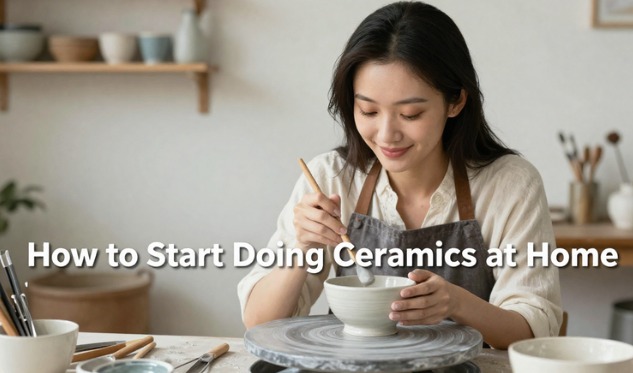
Ceramics has a lot going for it as a home hobby.
It can start small
You do not need a full studio to begin.
It is hands-on and calming
Many people enjoy the slow, physical process of shaping clay.
It mixes creativity with skill-building
You get both artistic freedom and technical improvement over time.
It is practical
You can make decorative pieces, gifts, and useful household items.
It grows with you
A simple beginner setup can eventually expand into a more advanced home studio.
One of the best things about ceramics is that you do not have to master everything at once. You can build your skills one project at a time.
Do You Need a Pottery Wheel to Start Ceramics at Home?
No, and this is one of the biggest beginner misconceptions.
A pottery wheel is not required to start doingchow to do ceramics at homeat home. In fact, many people do beautiful ceramic work for years without using one.
Why beginners often start without a wheel
- lower cost
- less space needed
- easier cleanup
- easier learning curve
- more flexible project options
- less frustration early on
Hand-building lets you focus on understanding clay before adding the complexity of wheel throwing. That usually leads to a stronger foundation.
If you later decide you love ceramics and want to make more symmetrical forms, you can always add a wheel later.
Best Ways to Start Ceramics at Home
There are three realistic paths for beginners.
1. Start with hand-building and use outside firing
This is often the best choice. You make your pieces at home, then take them to a local studio or pottery service for kiln firing.
2. Start with hand-building and buy your own kiln later
This works well if you become serious about the hobby and want full control over the process.
3. Practice with air-dry clay first
This is not the same as true ceramics, but it can help you build shaping confidence before moving into real fired clay.
If your goal is actual ceramics, hand-building with real clay and outside firing is often the smartest beginner path.
What You Need to Start Doing Ceramics at Home
You do not need a long list of expensive supplies. A simple beginner setup is enough.
Basic essentials
- clay
- a work surface
- a rolling pin or slab roller substitute
- a wire cutter
- a needle tool
- a sponge
- a rib or scraper
- a few shaping tools
- a small bucket for water
- plastic for wrapping clay
- a towel or apron
Helpful extras
- texture tools
- carving tools
- wooden modeling tools
- a banding wheel
- measuring ruler
- bats or boards for moving pieces
- storage containers for tools
Optional for later
- pottery wheel
- kiln
- glazes
- underglazes
- test tiles
- shelving for drying and storage
A beginner does not need all the advanced tools. Good clay handling matters much more than owning every tool.
How to Choose Clay as a Beginner
Choosing the right clay makes the learning process easier.
Earthenware clay
This is a common beginner choice. It is often softer to work with and fires at a lower temperature. It is good for decorative items and many basic pottery projects.
Stoneware clay
This is one of the most popular choices for functional pottery. It is durable and versatile, though sometimes a little stiffer than beginner earthenware.
Porcelain
Porcelain is beautiful, but it is usually not the best starting clay. It can be more difficult to handle and is less forgiving for beginners.
Air-dry clay
This is good for casual craft practice, but it is not the same as real fired ceramics. It is useful if you want to test shapes and ideas before committing to kiln-fired clay.
Best beginner choice
For most people learning real ceramics at home, a smooth beginner-friendly earthenware or stoneware clay is the best option.
If you plan to use an outside kiln service, ask what clay bodies they accept before buying in bulk.
How Much Clay Do You Need to Start?
Not much.
A small amount of clay can go a long way when you are learning. Beginners often do best with enough clay to make several small projects rather than one giant ambitious piece.
A reasonable starting amount lets you:
- practice basic forms
- remake projects without stress
- learn how clay dries
- make mistakes without feeling wasteful
Ceramics is a skill built through repetition. More small practice pieces are often better than one big complicated piece.
Setting Up a Ceramics Workspace at Home
Your workspace does not need to be large, but it does need to be practical.
Choose the right surface
A sturdy table is ideal. Cover it with canvas, a clay mat, or another surface that helps manage stickiness and cleanup.
Think about ventilation
A well-ventilated space is important, especially once you start sanding dry glaze drips or handling dusty materials. Clay dust should be minimized.
Keep water nearby
You will need a little water for smoothing and joining, but not too much. Overwatering clay causes problems.
Plan for mess
Clay is manageable, but it does get around. Use dedicated towels, aprons, and storage bins.
Keep a drying area
Pieces need a place to dry slowly and safely where they will not be bumped.
Avoid carpeted areas
Clay cleanup is much easier on hard floors.
Good home workspace options
- garage
- utility room
- spare room
- covered porch in suitable weather
- basement with proper ventilation
- craft room with easy-clean surfaces
The ideal ceramics workspace is simple, sturdy, and easy to clean.
Safety and Cleanliness When Doing Ceramics at Home
This part matters more than many beginners realize.
The main concern in home ceramics is not wet clay. It is clay dust. When dry clay dust becomes airborne, you do not want to breathe it in regularly.
Good safety habits
- clean with a damp sponge instead of sweeping dry dust
- wipe surfaces regularly
- keep clay scraps contained
- avoid sanding dry clay indoors when possible
- do not shake dusty towels in the air
- mop or wipe floors instead of dry sweeping
Important rule
Think “wet cleanup, not dusty cleanup.”
That one habit alone makes home ceramics much safer and easier to manage.
Do You Need a Kiln to Do Ceramics at Home?
Not necessarily.
This is one of the biggest questions beginners ask, and the answer is encouraging: you do not need to own a kiln to start doing ceramics at home.
Why you can start without a kiln
You can shape, build, trim, and dry your work at home, then have it fired elsewhere.
Common alternatives to owning a kiln
- local pottery studios
- community art centers
- independent kiln rental services
- pottery teachers who offer firing
- ceramics supply shops with firing programs
This is often the best beginner solution because kilns are a serious investment and come with extra safety, electrical, and space requirements.
Should You Buy a Kiln as a Beginner?
Usually not right away.
A kiln can be a fantastic long-term investment, but it is rarely the first thing a beginner needs. It adds major cost and responsibility.
Reasons to wait before buying a kiln
- you may still be deciding whether ceramics is a lasting hobby
- kilns need proper space and safety planning
- firing has its own learning curve
- you may not yet know what size or type you need
When buying a kiln starts making sense
- you are consistently making work
- local firing options are limited or expensive
- you have a safe dedicated space
- you want more control over firing schedules and glaze results
For most beginners, using outside firing first is the smarter path.
Do You Need Glaze to Start Ceramics at Home?
No. You can begin long before you get into glazing.
Many beginners assume ceramics means wheel plus glaze plus kiln from the start. It does not. You can learn a huge amount just by shaping clay and making simple forms.
What you can learn before glazing
- wedging clay
- joining pieces
- controlling thickness
- drying work evenly
- trimming edges
- building stronger forms
- decorating surfaces with texture
Glazing can come later. In fact, many beginners progress faster when they focus on form first and surface finishing second.
Best Beginner Ceramics Projects to Make at Home
Starting with the right projects makes a big difference. Choose forms that teach useful skills without being overly complicated.
Pinch pots
These are one of the best first projects. They teach wall thickness, hand pressure, and shaping.
Small bowls
A simple slab or pinch bowl is practical and teaches balance and form.
Trinket dishes
These are easy, fun, and forgiving.
Small trays
A slab-built tray teaches rolling, cutting, and edge control.
Coasters
Good for learning flat slab work and basic decoration.
Simple mugs without wheel throwing
Hand-built mugs can teach joining, shaping, and handle attachment.
Wall hangings or decorative tiles
These are excellent for surface design and texture practice.
Spoon rests
A very beginner-friendly practical project.
Start with small forms. Small pieces dry more evenly, are easier to control, and usually feel more rewarding early on.
How to Learn Ceramics Basics at Home
A lot of beginners ask whether they need a full course before starting. You do not need one, but you do need a basic learning process.
Learn the core clay skills first
These matter more than fancy projects:
- wedging clay
- scoring and slipping joins
- controlling moisture
- drying slowly
- compressing slabs
- supporting shapes while building
Practice repetition
Do the same project more than once. Your third small bowl will usually teach you more than your first large platter.
Study drying and timing
Ceramics is partly about patience. Learning the stages of wet clay, leather-hard clay, bone dry clay, and fired clay is essential.
Accept imperfect pieces
Every ceramic beginner makes warped, cracked, or awkward work at first. That is normal.
The fastest learners are usually the ones who make peace with messy early attempts.
What Is the Cheapest Way to Start Ceramics at Home?
If budget matters, you can absolutely start small.
Lowest-cost real ceramics setup
- beginner clay
- a few basic tools
- a household rolling pin
- a table workspace
- outside kiln firing
This gives you a true ceramics experience without the cost of a wheel or kiln.
Budget-friendly beginner strategy
- start with hand-building
- make small projects
- use a minimal tool kit
- fire pieces through a local studio
- add equipment only after you know you want to continue
That approach keeps the hobby affordable while still being real ceramics.
Is Air-Dry Clay Good for Learning Ceramics?
It can help, but it has limits.
Air-dry clay is useful for:
- practicing shapes
- understanding simple construction
- making decorative non-fired craft items
- testing designs before using real clay
But it is not the same as ceramic clay because:
- it does not fire in a kiln
- it is generally less durable
- it behaves differently with moisture
- it does not teach the full ceramic process
If your true goal is pottery or ceramics, air-dry clay is a temporary practice tool, not a replacement.
Hand-Building Methods Every Beginner Should Know
If you are starting ceramics at home, hand-building is your foundation.
Pinch method
You shape a ball of clay by pressing and rotating it with your fingers. Great for bowls, cups, and organic forms.
Coil method
You roll clay into ropes and stack them to build upward. Great for vases, planters, and sculptural pieces.
Slab method
You roll clay flat and cut shapes from it. Great for trays, boxes, plates, and wall pieces.
These three methods alone can take you surprisingly far.
How to Join Clay Properly
Many beginner ceramics pieces fail because the joins are weak.
To attach clay pieces successfully, you usually need to:
- score both surfaces
- add slip
- press together firmly
- smooth and reinforce the join
This matters for:
- handles
- feet
- added decoration
- mug parts
- sculptural attachments
Good joining is one of the most important early skills in home ceramics.
Drying Your Ceramics at Home the Right Way
Many beginner pieces crack not because they were badly made, but because they dried too quickly or unevenly.
Good drying habits
- dry pieces slowly
- cover loosely with plastic when needed
- flip slabs carefully
- protect handles and thin parts
- avoid strong direct sunlight or heaters
- let pieces dry evenly on all sides
Ceramics rewards patience. Slow drying is often the difference between success and cracks.
Firing Your Pieces If You Do Not Own a Kiln
Once your piece is fully dry, it still needs firing if you are using real ceramic clay.
Typical outside-firing process
- make your piece at home
- let it reach bone dry stage
- transport carefully
- have it bisque fired
- glaze it if you want
- have it glaze fired
Some services will help guide you through clay type, firing temperature, and glaze compatibility. That is one reason outside firing is so helpful for beginners.
When to Move From Beginner to More Serious Home Ceramics
At some point, you may realize this is no longer just a casual experiment. That is when you can begin upgrading your setup.
Signs you are ready to invest more
- you are making work regularly
- you understand basic drying and building
- you want more control over results
- you are frustrated by limited tools
- you have enough space for a more permanent setup
Good next upgrades
- better hand tools
- a banding wheel
- more clay storage
- dedicated shelving
- glaze supplies
- pottery wheel
- kiln, if appropriate
There is no rush. A simple setup can still produce beautiful work.
Common Beginner Mistakes in Home Ceramics
Knowing these can save you frustration.
Starting with projects that are too big
Large pieces are harder to dry and more likely to crack.
Using too much water
This weakens clay and makes pieces floppy.
Attaching pieces without scoring and slipping
Weak joins often fail.
Drying too fast
This is one of the most common causes of cracking.
Buying too much equipment too early
It is better to learn what you actually enjoy first.
Ignoring cleanup habits
Clay dust control matters.
Expecting perfect first results
Ceramics is learned through repetition.
The beginner who improves fastest is usually the one who stays patient and keeps making things.
How to Stay Motivated When Learning Ceramics at Home
Ceramics has a slower learning curve than some hobbies, so mindset matters.
Keep your first goals simple
Do not begin with a full dinner set or giant vase.
Make useful small pieces
A spoon rest or small tray can feel very satisfying.
Repeat projects
One shape made three times teaches more than three unrelated projects made once.
Track progress
Take photos of your work as you improve.
Focus on process, not perfection
Ceramics often looks better after many attempts, not one perfect session.
The best way to keep going is to make the hobby manageable and enjoyable from the beginning.
Best Home Ceramics Setup for Beginners
If you want a simple practical model to follow, this is a great starting point:
Beginner home ceramics plan
- choose hand-building first
- buy a beginner-friendly clay
- set up a sturdy easy-clean table
- get a small basic tool kit
- make small projects only at first
- dry pieces slowly
- use a local kiln service for firing
- learn glazing later if needed
This path keeps the hobby affordable, realistic, and enjoyable.
Frequently Asked Questions
1. Can I really start ceramics at home without a studio?
Yes. Many beginners start at home with a table, clay, basic tools, and hand-building methods. You do not need a full studio to begin.
2. Do I need a pottery wheel to start ceramics?
No. Hand-building is the easiest and most beginner-friendly way to start ceramics at home.
3. Do I need a kiln to do ceramics at home?
No. You can make your pieces at home and use a local studio or firing service to fire them.
4. What is the best clay for beginners?
A beginner-friendly earthenware or stoneware clay is usually the best choice for starting real ceramics.
5. Is air-dry clay good for learning?
It can help with shaping practice, but it is not the same as real ceramic clay and does not replace kiln-fired ceramics.
6. What is the easiest first ceramics project?
Pinch pots, small bowls, trinket dishes, and slab trays are some of the easiest and best beginner projects.
7. Is ceramics an expensive hobby to start?
It can be started fairly affordably if you begin with hand-building, basic tools, and outside firing instead of buying a wheel and kiln immediately.
8. Can I do ceramics in a small apartment?
You can do small-scale hand-building in a small space if you manage cleanup carefully, avoid dust, and have a practical work surface.
9. How messy is doing ceramics at home?
It can be messy, but it is manageable with good habits, damp cleanup, and a dedicated workspace.
10. How long does it take to get good at ceramics?
You can make enjoyable beginner pieces quickly, but real improvement comes through repeated practice over time.
Conclusion
Learning how to start doing ceramics at home does not require a perfect studio, an expensive wheel, or a kiln from the very beginning. The easiest and smartest way to start is usually with hand-building, a small tool kit, beginner-friendly clay, and simple projects that let you learn the material step by step. You can build, shape, and decorate your work at home, then use a local firing service until you know whether ceramics is something you want to pursue more seriously.
That slow, practical approach makes ceramics much more accessible. It also gives you time to understand the real rhythm of the craft: shaping, joining, drying, refining, and gradually improving. Instead of trying to master everything at once, you get to enjoy the process and grow into it.
If you are curious about ceramics, the best time to start is with a small first project and realistic expectations. A simple bowl, tray, or pinch pot made at home can be the beginning of a hobby that becomes creative, calming, and deeply satisfying for years to come.
