
If you have ever looked at a shiny mug, a colorful dinner plate, or a smooth pottery vase and wondered what is glazing in ceramics, you are asking one of the most important questions in pottery and ceramic art. Glazing is the process that gives ceramics their finished surface, color, texture, and often their practical usefulness. It can make a clay piece glossy, matte, smooth, waterproof, decorative, and much more.
In simple words, glazing in ceramics means applying a special coating called glaze to a clay object and then firing it in a kiln so the coating melts and bonds to the surface. Once fired, the glaze becomes a glass-like layer that changes how the ceramic looks and performs. That is why glaze is such a major part of pottery, studio ceramics, dinnerware production, and ceramic decoration.
For beginners, glazing can seem a little mysterious. You shape the clay, let it dry, fire it once, brush or dip on a glaze, and then somehow the piece comes out of the kiln with a completely different surface. It can look brighter, smoother, darker, more colorful, or more refined than before. That transformation is one of the reasons ceramics feels both artistic and technical at the same time.
Glazing is not just about beauty. It also plays a practical role. In many ceramics, glaze helps seal the surface, making it less porous and more suitable for holding liquids or food. On decorative pieces, it adds visual depth and character. On functional ware like bowls, cups, and plates, it can improve durability and make cleaning easier.
If you are new to pottery, collecting handmade ceramics, or simply curious about the craft, understanding what is glazing in ceramics will help you appreciate how much thought goes into every finished piece. Glaze choice affects color, surface feel, firing temperature, usability, and even the final mood of a ceramic object.
This guide explains glazing in clear, reader-friendly language. You will learn what ceramic glaze is, how it works, why potters use it, the main types of glaze, common glazing methods, firing stages, and the most important things to know if you want to understand ceramics more deeply.
What Is Glazing in Ceramics?
Glazing in ceramics is the process of coating a clay piece with a glaze and then firing it in a kiln so the glaze melts into a thin, glass-like layer on the surface. This layer can change the appearance, texture, strength, and function of the ceramic.
A glaze is usually made from a mixture of minerals and other materials that react to heat. Before firing, glaze often looks like a chalky liquid or dry coating. After firing, it transforms into a finished surface that may appear glossy, satin, matte, transparent, opaque, smooth, or textured depending on the formula and firing conditions.
That is the basic answer to what is glazing in ceramics, but the full story is more interesting. Glazing is where science and design meet. A small change in glaze recipe, thickness, or firing temperature can create a very different final result.
For example, the same clay mug can look rustic and earthy with a matte brown glaze, or bright and modern with a glossy white glaze. The shape may stay the same, but the glaze changes the entire personality of the piece.
What Is Ceramic Glaze Made Of?
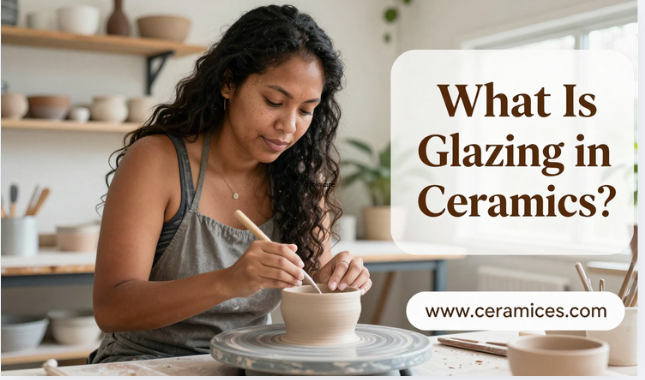
Ceramic glaze is made from a combination of materials that melt and react in the kiln. The exact recipe varies, but most glazes include ingredients that help them melt, form glass, stay stable on the clay surface, and produce color or texture.
Common glaze ingredients often include:
- Silica
- Fluxes
- Alumina
- Colorants
- Opacifiers
- Special effect materials
Silica
Silica is one of the main glass-forming materials in glaze. When fired, it helps create the glassy surface.
Fluxes
Fluxes help lower the melting temperature of the glaze so it can melt properly inside the kiln.
Alumina
Alumina helps stabilize the glaze and keeps it from running too much during firing.
Colorants
Metal oxides and other additives are often used to create color. Different materials can produce blues, greens, browns, blacks, reds, and more.
Opacifiers
These make a glaze more solid or less transparent.
Effect Materials
Some glazes include materials that produce speckles, crystals, layering effects, or surface variation.
To someone outside the ceramic world, this can sound complicated. But at its core, glaze is a heat-reactive coating designed to melt and become part of the ceramic surface.
Why Do Potters Glaze Ceramics?
One of the easiest ways to understand what is glazing in ceramics is to ask why potters do it at all. The answer is both practical and artistic.
1. To Add Beauty
Glaze can add color, depth, shine, softness, contrast, and visual character. It is one of the most expressive parts of ceramic design.
2. To Seal the Surface
Many clay bodies remain porous after firing unless glazed or vitrified enough at high temperatures. Glaze helps create a more sealed surface.
3. To Make Pieces Functional
On mugs, bowls, plates, and other functional ware, glaze can make the piece more suitable for everyday use.
4. To Improve Cleanability
A glazed surface is often easier to wipe, rinse, and clean than an unglazed porous surface.
5. To Create Different Textures
Not every glaze is shiny. Some create soft matte finishes, rough textures, crackle effects, or layered visual surfaces.
6. To Express Artistic Style
Glaze is part of a potter’s creative voice. Two artists can make the same form and produce totally different results through glaze choices alone.
In other words, glaze is not an afterthought. It is a major part of how ceramics become finished works.
How Does Glazing in Ceramics Work?
The glazing process usually begins after a clay piece has already gone through an initial firing known as a bisque firing. Bisque-fired pottery is strong enough to handle but still porous enough to accept glaze.
Here is the basic idea of how glazing works:
First, the potter shapes the piece from clay. After it dries completely, it goes through the first kiln firing. This turns the fragile dry clay into bisque ware. Then glaze is applied to the surface. After that, the piece goes back into the kiln for a second firing. During this firing, the glaze melts, flows, and bonds to the ceramic body.
As the kiln cools, the glaze hardens into the finished surface.
That is why glazing often feels magical to beginners. The glaze may look dull, pale, or powdery before firing, but after the kiln cycle it becomes glossy, smooth, colorful, or richly textured.
The Main Stages of Glazing in Ceramics
To understand what is glazing in ceramics, it helps to know the full sequence.
1. Forming the Piece
The ceramic object is made by hand-building, wheel-throwing, slip-casting, or another clay-forming method.
2. Drying
The piece must dry completely before firing. Any moisture left inside can cause cracking or breakage in the kiln.
3. Bisque Firing
This first firing hardens the clay and prepares it for glaze application.
4. Glaze Application
The glaze is applied by dipping, brushing, pouring, or spraying.
5. Glaze Firing
The glazed piece is fired again so the glaze melts and matures.
6. Cooling and Inspection
After cooling, the potter inspects the final result for color, texture, fit, and any glaze defects.
Each step matters. A problem in drying, firing, or glaze thickness can affect the final piece.
Types of Ceramic Glaze
There are many kinds of glaze, and each can create a different look and feel. This variety is part of what makes ceramics so interesting.
Gloss Glaze
Gloss glaze creates a shiny, reflective finish. It is one of the most recognizable glaze types and is common on mugs, plates, and decorative pottery.
Matte Glaze
Matte glaze has a softer, less reflective finish. It can look elegant, modern, earthy, or understated.
Satin Glaze
Satin glaze sits between glossy and matte. It has a gentle sheen without being highly reflective.
Transparent Glaze
Transparent glaze allows the clay body or decoration underneath to show through.
Opaque Glaze
Opaque glaze covers the underlying surface more fully and gives a more solid appearance.
Colored Glaze
Colored glazes use specific materials to produce a wide range of tones and shades.
Clear Glaze
Clear glaze is often used over decoration or on functional ware when the potter wants to keep the clay or painted design visible.
Specialty Glaze
These glazes may create speckles, crystallization, crackle, layering, ash-like effects, or dramatic movement during firing.
Each glaze type contributes not only to appearance but also to the mood and personality of the work.
Common Methods of Applying Glaze
Another important part of what is glazing in ceramics is how the glaze gets onto the pottery in the first place.
Dipping
The ceramic piece is dipped into a container of glaze. This is fast and gives even coverage, especially in studio production.
Brushing
Glaze is brushed onto the surface in coats. This method is popular for small studios, hobby potters, and detailed work.
Pouring
Glaze can be poured over the piece or into the interior of forms like bowls and cups.
Spraying
Spraying allows smooth, controlled glaze application and is often used for layering or large surfaces.
Layering
Some potters apply multiple glazes over one another to create complex visual effects.
The application method can influence the final look. A thick coat may run more. A thin coat may appear lighter or more transparent. Technique matters just as much as the glaze formula.
What Happens During Glaze Firing?
This is where the transformation happens.
When the glazed ceramic is heated in the kiln, the glaze materials begin to melt at certain temperatures. As the heat rises, the ingredients react, combine, and form a molten coating. This coating bonds to the surface of the clay body. When the kiln cools, the melted glaze solidifies into a finished layer.
This is why firing temperature is so important in ceramics. A glaze must match the firing range it was designed for. If the temperature is too low, the glaze may not mature properly. If it is too high, the glaze may run, blister, or behave unpredictably.
The atmosphere in the kiln can also affect glaze results. Oxidation and reduction firing can produce very different color outcomes with some glaze materials. That is one reason ceramic artists often test glazes carefully.
Glazing in Ceramics for Function vs Decoration
Not all ceramics are glazed for the same reason.
Functional Ceramics
Functional ceramics include mugs, bowls, plates, pitchers, and other items used in daily life. In these pieces, glaze often helps make the surface smoother, more sealed, and more practical for use.
Decorative Ceramics
Decorative ceramics may include sculptures, art objects, wall pieces, and ornamental vessels. In these works, glaze may be used mainly for artistic effect rather than utility.
Sometimes potters also leave parts of a piece unglazed on purpose. This can create contrast between raw clay and finished glaze, adding warmth and texture to the design.
Is Glazing Always Necessary in Ceramics?
No, glazing is not always necessary. Some ceramics are intentionally left unglazed for artistic, tactile, or traditional reasons.
Unglazed ceramics can have a natural, earthy beauty. Many sculptural works and some traditional pottery styles embrace the raw surface of fired clay. Certain clay bodies also become dense enough at high temperatures to function well without glaze in some uses.
Still, for many everyday functional pieces, glaze is highly important because it improves usability and surface protection.
So when asking what is glazing in ceramics, it is useful to remember that glaze is common and important, but not absolutely required in every kind of ceramic work.
What Is the Difference Between Bisque and Glaze?
This is a very common beginner question.
Bisque
Bisque refers to pottery that has been fired once but has not yet been glaze fired. It is hard and durable enough to handle, but still porous.
Glaze
Glaze is the coating applied to the bisque piece before the final firing.
Glaze Firing
This is the second firing where the glaze melts and becomes the finished surface.
A simple way to think about it is this: bisque is the prepared ceramic body, and glaze is the finishing layer added afterward.
Common Glaze Effects in Ceramics
Glazing is not only about color. It can also create amazing visual and tactile effects.
Glossy Finish
Bright, smooth, reflective surfaces are common in many functional pieces.
Matte Finish
Soft and muted finishes often create a more modern or handmade look.
Speckled Surface
Some glazes contain materials that create tiny flecks after firing.
Layered Color Variation
When multiple glazes interact, they can produce flowing, complex surfaces.
Crackle Effect
Some glazes intentionally develop fine crack lines as part of the design.
Reactive Surfaces
Certain glazes change character depending on thickness, clay body, and kiln atmosphere.
This variety is one reason ceramic glaze is so exciting. The same basic form can become completely different depending on the glaze used.
Challenges and Risks in Glazing
Glazing is rewarding, but it is also one of the trickiest parts of ceramics. Small changes can produce big differences.
Common glaze problems may include:
- Drips or running
- Pinholes
- Crawling
- Blistering
- Uneven color
- Cloudiness
- Cracking
- Glaze fit issues
A glaze that works beautifully on one clay body may behave differently on another. A coat that is too thick or too thin can affect the result. Kiln temperature, hold time, cooling speed, and placement in the kiln can all matter.
That is why experienced potters do so much testing. Behind every beautiful finished piece is often a lot of trial, adjustment, and learning.
How Beginners Can Understand Glazing More Easily
If glaze feels confusing at first, that is normal. A simple way to understand what is glazing in ceramics is to think of glaze as both a decorative coating and a functional finish.
It helps to remember three basic ideas:
First, glaze changes how a piece looks.
Second, glaze can change how a piece works.
Third, glaze only becomes glaze after firing.
For beginners in pottery classes, the best way to learn glaze is by observation and practice. Compare pieces before and after firing. Notice how different finishes feel in your hand. Pay attention to how one glaze looks different on light clay versus dark clay. That hands-on experience teaches a lot.
Why Glazing Matters So Much in Pottery
Glazing matters because it can completely define the final identity of a ceramic piece. Form is important, but glaze often determines how the piece is experienced visually and physically.
A mug without glaze may feel rough and unfinished. The same mug with a rich blue glossy glaze may feel polished and inviting. A vase with a matte earthy glaze may feel calm and organic. A bowl with a speckled white glaze may feel modern and handcrafted.
Glaze is often where craftsmanship becomes most visible to the user. It is what people see first, touch directly, and remember most strongly.
That is why ceramic artists spend so much time thinking about glaze combinations, surfaces, kiln results, and material behavior. Glazing is not just a technical step. It is part of the creative heart of ceramics.
10 FAQs About Glazing in Ceramics
1. What is glazing in ceramics?
Glazing in ceramics is the process of applying a glaze coating to clay and firing it in a kiln so it becomes a glass-like finished surface.
2. What does ceramic glaze do?
Ceramic glaze adds color, texture, shine, and protection. It can also help make pottery more functional and easier to clean.
3. Is glaze necessary on all ceramics?
No. Some ceramics are intentionally left unglazed for artistic or traditional reasons, though many functional pieces benefit from glaze.
4. What is the difference between glaze and paint in ceramics?
Glaze is not just surface paint. It chemically changes in the kiln and becomes part of the ceramic surface after firing.
5. Why does glaze look different before firing?
Before firing, glaze often looks chalky or dull. The final color and texture appear only after the glaze melts and cools in the kiln.
6. Can glaze make pottery waterproof?
In many cases, glaze helps create a more sealed surface, which is especially useful for mugs, bowls, and plates.
7. What are the main types of ceramic glaze?
Common types include gloss, matte, satin, transparent, opaque, clear, and specialty effect glazes.
8. How is glaze applied to pottery?
Glaze can be applied by dipping, brushing, pouring, spraying, or layering.
9. What is bisque in ceramics?
Bisque is pottery that has been fired once and is ready for glaze application before the final firing.
10. Why is glazing important in pottery?
Glazing is important because it affects the appearance, texture, function, and overall finished quality of a ceramic piece.
Conclusion
So, what is glazing in ceramics? It is the process of applying a glaze coating to pottery or clay work and firing it so the surface transforms into a finished, glass-like layer. That layer can add color, shine, softness, texture, protection, and practical function. In many ways, glazing is what turns shaped clay into a completed ceramic object.
It is also one of the most fascinating parts of the ceramic process because it blends art, chemistry, heat, and craftsmanship. A potter can shape a beautiful form, but glaze is often what gives that form its final voice. It can make a piece feel rustic, elegant, modern, bold, subtle, earthy, or refined.
For functional pottery, glaze often helps make a piece more useful and easier to care for. For decorative ceramics, it adds depth, style, and visual emotion. And for anyone learning about pottery, understanding glazing opens the door to appreciating just how much skill goes into every finished mug, bowl, tile, or vase.
The next time you hold a ceramic piece in your hands, look closely at the surface. The shine, color, softness, texture, and detail you notice are often the direct result of glazing. Once you understand that, you start to see ceramics in a much deeper and more meaningful way.
