
If you are asking what type of flooring can I put over ceramic tile, the good news is that you have several solid options. In many cases, you do not have to tear out the old tile before installing a new floor. That can save time, reduce labor, cut down on mess, and lower the overall cost of your renovation.
This is one of the biggest reasons homeowners look for flooring that can go directly over ceramic tile. Removing tile is hard work. It creates dust, noise, and debris. It can also damage the subfloor underneath, which adds more repair work before the new flooring even goes in. If the existing ceramic tile is in decent condition, covering it can be a much easier path.
Still, not every flooring type is a perfect match. The old tile has to be stable, level enough, and well bonded to the floor underneath. Cracked, loose, or uneven tile can create problems later, even if the new flooring looks fine at first. That is why the real answer to what type of flooring can I put over ceramic tile depends on both the new floor you want and the condition of the tile below it.
Some flooring materials are much better for this than others. Luxury vinyl plank, sheet vinyl, laminate, engineered wood, carpet, and even some floating floor systems can often work over ceramic tile. In some cases, tile can even be installed over tile if the surface is prepared correctly. The best choice depends on height, moisture, room type, budget, and how smooth the current tile surface is.
This guide explains everything clearly. You will learn which flooring types work best over ceramic tile, which ones need more preparation, what problems to watch for, and how to choose the right option for your home.
Can You Put Flooring Over Ceramic Tile?
Yes, in many cases you can put flooring over ceramic tile.
That said, the tile must usually meet a few basic conditions first. It should be firmly attached, not loose or hollow in major areas, and not badly cracked across the room. The surface should also be reasonably flat. A floor does not have to be perfect, but major height changes, broken tiles, or deep grout lines can affect how the new flooring performs.
This matters because the old tile becomes the base for the new floor. If the tile underneath shifts, cracks, or sits unevenly, that can transfer to the new material over time. Floating floors may flex. Glue-down floors may fail to bond properly. Carpet may show unevenness. Thinner flooring may reveal grout lines if the surface is not prepared.
So the answer to what type of flooring can I put over ceramic tile is not only about the flooring product. It is also about whether the existing tile is a stable foundation.
If the tile is well bonded and mostly level, covering it is often a smart renovation move. If it is loose, badly damaged, or uneven, repairs or removal may still be the better option.
Why Homeowners Install Over Ceramic Tile
There are several reasons people want to install new flooring over existing ceramic tile.
The first is cost. Tile removal can be expensive, especially if you hire professionals. The second is time. Tearing out tile often turns a flooring project into a bigger demolition job. The third is mess. Ceramic tile removal creates dust, broken pieces, and noise, which many homeowners would rather avoid.
Installing over tile can also protect the subfloor from damage during removal. That is especially helpful in older homes where the subfloor may already need care. In some rooms, covering the tile is simply the faster and cleaner solution.
Another reason is convenience. Some modern flooring products are specifically designed to float over existing hard surfaces with minimal disruption. That means a homeowner can update the look of a kitchen, bathroom, hallway, or living area without a full tear-out.
So when people search what type of flooring can I put over ceramic tile, they are often really asking how to make a renovation easier. In many homes, the right flooring choice can do exactly that.
What You Need to Check Before Covering Tile
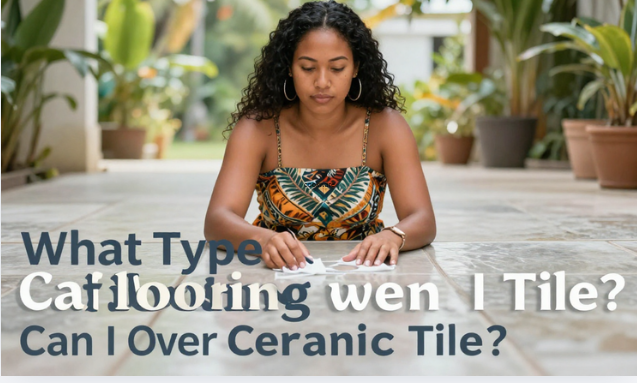
Before choosing a new floor, check the condition of the tile carefully.
First, make sure the tile is firmly attached. Loose or rocking tiles are a warning sign. Second, check for major cracks. A few cosmetic issues may be manageable, but widespread damage is more serious. Third, look at flatness. A surface with significant lippage, deep grout joints, or uneven tile heights may need leveling work first.
You should also think about floor height. Adding flooring over tile raises the finished floor. That can affect doors, trim, appliances, transitions to other rooms, and sometimes toilets or cabinets depending on the material and room.
Moisture matters too. In bathrooms, laundry rooms, kitchens, and basements, the flooring choice must be able to handle the conditions. Some products perform much better than others in damp or spill-prone spaces.
This step is important because the best answer to what type of flooring can I put over ceramic tile changes depending on the room and how well the existing tile is holding up.
Luxury Vinyl Plank Over Ceramic Tile
Luxury vinyl plank is one of the best and most popular options to install over ceramic tile.
It is widely chosen because it is durable, water-resistant or waterproof in many versions, fairly easy to install, and available in styles that look like wood or stone. Many luxury vinyl plank products are floating floors, which means they do not need to be glued directly to the tile. That makes installation simpler in many homes.
Luxury vinyl plank works especially well over ceramic tile when the existing tile is stable and the grout lines are not excessively deep. If the grout joints are very pronounced, a leveling compound or patch may be needed so those lines do not telegraph through thinner vinyl flooring over time.
This flooring is a strong choice for kitchens, hallways, living areas, laundry rooms, and even some bathrooms depending on the product. It is also a favorite for homeowners who want a modern update without the mess of tile demolition.
For many people asking what type of flooring can I put over ceramic tile, luxury vinyl plank is the easiest and most practical answer.
Sheet Vinyl Over Ceramic Tile
Sheet vinyl is another flooring type that can often be installed over ceramic tile.
One advantage of sheet vinyl is that it offers good moisture resistance and a relatively soft feel underfoot compared with tile. It can work especially well in kitchens, bathrooms, and laundry areas where water resistance matters.
However, the tile underneath must be prepared carefully. Sheet vinyl is thin enough that grout lines and uneven tile patterns may show through if the surface is not smoothed first. In many cases, a skim coat or floor patch is used to flatten the tile surface before installation.
This option is often attractive for budget-conscious homeowners because it can give a fresh look at a lower cost than some other flooring types. It also comes in many designs, including wood-look, stone-look, and classic resilient patterns.
So if you are wondering what type of flooring can I put over ceramic tile in a moisture-prone area, sheet vinyl can be a smart option as long as the floor is properly prepared.
Luxury Vinyl Tile Over Ceramic Tile
Luxury vinyl tile is very similar to luxury vinyl plank, but it is designed in tile-sized pieces rather than plank form.
This makes it a good option for homeowners who want a stone-look or tile-look floor without the hardness and cold feel of actual ceramic tile. Like vinyl plank, many luxury vinyl tile products can float over existing ceramic tile if the surface is reasonably flat and stable.
It works well in spaces where homeowners want durability and easier maintenance. It can also be a good way to update an old tile floor visually without full demolition.
The key concern is still surface smoothness. If the ceramic tile has deep grout lines or noticeable unevenness, the base may need patching first. Thicker and higher-quality luxury vinyl tile products usually do a better job hiding minor imperfections than thinner budget options.
For homeowners who like the look of stone but want easier installation, this can be a very appealing answer to what type of flooring can I put over ceramic tile.
Laminate Flooring Over Ceramic Tile
Laminate flooring can also be installed over ceramic tile in many cases.
Because laminate is usually installed as a floating floor, it can sit over tile without requiring direct bonding to the surface below. That makes it a practical option when the tile is stable and level enough. Underlayment may also help smooth minor variations and reduce sound.
Laminate is a popular choice in bedrooms, living rooms, hallways, dining rooms, and other dry areas. It offers a wood-look style at a lower price than real hardwood in many cases. Some newer laminates also have better water resistance than older versions, though they are still not always the best fit for very wet environments.
The main concern with laminate over tile is that the tile surface needs to be relatively smooth. Major grout depressions or sharp height differences can affect the way the laminate locks together and wears over time.
If you want a wood-look floor without removing tile, laminate is often a reasonable option, especially in drier rooms.
Engineered Wood Over Ceramic Tile
Engineered wood can sometimes be installed over ceramic tile, especially in floating floor form.
This option appeals to homeowners who want the real wood look and feel without installing solid hardwood. Engineered wood is more dimensionally stable than solid wood, which makes it more forgiving in many indoor conditions.
Still, engineered wood over tile usually requires extra attention to flatness. The tile beneath should be stable and fairly even. Underlayment may be used depending on the flooring system. Some engineered wood products are glued down, but floating systems are usually the easier route when covering tile.
This flooring tends to work best in living areas, bedrooms, home offices, and other drier spaces. It is usually not the first choice for bathrooms or very moisture-prone rooms.
So if your question is what type of flooring can I put over ceramic tile and you want a more upscale wood finish, engineered wood may be worth considering if the tile surface is suitable.
Carpet Over Ceramic Tile
Yes, carpet can be installed over ceramic tile.
This surprises some people, but carpet is often one of the simplest options when homeowners want to soften a room without removing tile. Carpet padding helps create a more forgiving surface, which can reduce the effect of minor tile unevenness.
This works best in bedrooms, living rooms, family rooms, and other spaces where softness and warmth matter more than moisture resistance. It is generally not the best fit for kitchens, bathrooms, or wet-prone zones.
The height issue still matters, especially near doorways and transitions. Also, if the tile surface has severe unevenness or broken areas, those may still need repair before carpet goes in.
For someone who wants comfort and noise reduction, carpet can be a practical answer to what type of flooring can I put over ceramic tile, particularly in quiet indoor living spaces.
Cork Flooring Over Ceramic Tile
Cork flooring can sometimes go over ceramic tile, though it depends on the product and the condition of the floor.
Cork is valued for being softer underfoot, quieter, and warmer than tile. Floating cork floor systems are usually the most realistic option when installing over an existing tile floor. These products may work well if the tile is stable and not excessively uneven.
Like other thinner materials, cork may need the grout lines and low spots addressed first. If the tile surface is rough or too irregular, that can affect how the cork flooring performs.
Cork tends to work best in bedrooms, offices, and living spaces where comfort matters and heavy moisture is less of a concern. It is not usually the first recommendation for bathrooms or very wet kitchens unless the product is specifically rated for those conditions.
For homeowners who want a softer natural floor, cork can be an option, but preparation matters.
Tile Over Tile
In some cases, new tile can be installed over existing ceramic tile.
This is a more specialized approach, but it can work if the old tile is firmly bonded, structurally sound, and properly prepared. The surface often needs cleaning, roughening, and possibly a bonding primer or appropriate mortar system depending on the installation method.
This is sometimes done in bathrooms, kitchens, and entryways where homeowners want another tile floor but do not want the demolition mess of removing the original tile. Still, floor height becomes a much bigger issue here because tile over tile adds significant thickness.
This option also demands good prep. If the old tile is loose, cracked badly, or unstable, tiling over it usually is not a good idea. Any problem in the old layer can transfer into the new one.
So yes, tile over tile is possible, but it is usually more technique-sensitive than floating floor options like vinyl plank or laminate.
Flooring Types That Need More Caution
Some flooring products can technically go over ceramic tile, but they need more care than others.
Solid hardwood is one of them. It is generally not the easiest choice over existing tile because it usually requires a very specific installation method and reacts more to moisture and movement. Glue-down flooring systems can also be more demanding because tile surfaces must be prepared very carefully for proper adhesion.
Very thin flooring materials may also be more likely to show grout lines, lippage, or surface imperfections. That does not always rule them out, but it does increase the need for prep work.
So while many floors can go over tile, some are far more forgiving than others. Floating products like luxury vinyl plank and laminate tend to be easier choices than more rigid or adhesive-dependent systems.
Do You Need to Level the Tile First?
In many cases, yes, at least a little.
One of the most common mistakes homeowners make is assuming that because the tile floor is already installed, it is ready for anything on top. But deep grout lines, chipped sections, uneven tile edges, or localized dips can all affect the new floor.
Sometimes the fix is minor, such as filling grout lines or patching low spots. In other situations, a more complete skim coat or leveling step is needed. The amount of prep depends on the new flooring type. Thicker floating floors may tolerate small imperfections better, while thinner glue-down products often need a smoother base.
This is an important part of the answer to what type of flooring can I put over ceramic tile because the flooring choice and the prep work go together.
Best Flooring Choices by Room
Different rooms often call for different answers.
In kitchens, luxury vinyl plank, sheet vinyl, and luxury vinyl tile are usually strong choices because they handle moisture and daily wear well. In bathrooms, sheet vinyl, luxury vinyl tile, and certain waterproof vinyl planks are often the safest picks. In living rooms and bedrooms, laminate, carpet, luxury vinyl plank, engineered wood, and even cork may all be good options.
Hallways and entryways usually need durability, so vinyl plank and laminate are often strong choices. Laundry rooms often benefit from vinyl because of moisture concerns.
The best flooring over ceramic tile depends not only on the tile but also on what the room demands every day.
Common Problems to Watch For
There are a few issues homeowners should think about before covering ceramic tile.
The first is height buildup. New flooring over tile raises the floor level and can affect door swing, transitions, appliances, and trim. The second is surface telegraphing. This happens when grout lines or tile patterns become visible through thinner flooring. The third is instability. If the tile underneath is loose, the new floor can fail later.
Another issue is moisture. Not every flooring type is equally suitable for bathrooms, kitchens, or laundry rooms. Choosing the wrong product for a damp space can create trouble even if the installation looks good at first.
These are not reasons to avoid flooring over tile. They are just reasons to plan carefully.
So, What Type of Flooring Can I Put Over Ceramic Tile?
If you want the clearest answer, here it is.
The most common flooring types you can put over ceramic tile are:
- Luxury vinyl plank
- Luxury vinyl tile
- Sheet vinyl
- Laminate flooring
- Engineered wood
- Carpet
- Cork in some cases
- New tile in some cases
For many homeowners, the best overall option is luxury vinyl plank because it is durable, attractive, forgiving, and often easier to install over existing tile than many other materials. Sheet vinyl is also strong for moisture-prone spaces. Laminate and engineered wood can work well in drier rooms. Carpet works when softness is the priority.
The right answer depends on room type, floor height, moisture exposure, and how smooth the existing tile is.
10 FAQs About What Type of Flooring You Can Put Over Ceramic Tile
1. Can you put new flooring over ceramic tile?
Yes, in many cases you can install new flooring over ceramic tile if the tile is stable, well bonded, and reasonably level.
2. What is the best flooring to put over ceramic tile?
Luxury vinyl plank is often one of the best options because it is durable, attractive, and often easier to install over tile.
3. Can laminate flooring go over ceramic tile?
Yes, laminate can often go over ceramic tile if the surface is flat enough and the tile is in good condition.
4. Can vinyl plank flooring go over ceramic tile?
Yes, vinyl plank is one of the most common flooring types installed over ceramic tile.
5. Do you need to remove ceramic tile before installing new flooring?
Not always. If the tile is sound and level enough, many flooring types can go directly over it.
6. Can carpet be installed over ceramic tile?
Yes, carpet can be installed over ceramic tile, especially in dry living areas where softness is desired.
7. Can you put tile over ceramic tile?
Yes, in some cases new tile can be installed over old ceramic tile if the existing tile is stable and prepared properly.
8. Will grout lines show through new flooring?
They can, especially with thinner flooring, unless the surface is patched or leveled first.
9. Is engineered wood okay over ceramic tile?
Yes, engineered wood can work over ceramic tile, especially as a floating floor in drier rooms.
10. What should you check before covering ceramic tile?
Check for loose tiles, cracks, unevenness, deep grout lines, moisture issues, and floor height changes.
Conclusion
So, what type of flooring can I put over ceramic tile? In many homes, you can install luxury vinyl plank, luxury vinyl tile, sheet vinyl, laminate, engineered wood, carpet, cork, or even new tile over the old ceramic tile. The best choice depends on the room, the condition of the tile, and how much prep the surface needs.
For most homeowners, luxury vinyl plank is one of the easiest and most practical options because it combines durability, style, and easier installation. Sheet vinyl is also strong in moisture-prone rooms, while laminate and engineered wood can work well in drier spaces. Carpet remains a comfortable choice for living areas and bedrooms.
The most important part is not just the flooring type. It is making sure the tile underneath is stable and smooth enough to support the new floor. When that part is handled correctly, covering ceramic tile can be a smart, cost-saving way to upgrade your home without a full demolition project.
