
A ceramic artist does far more than make pots.
That is one of the first things people get wrong.
When many people hear the phrase a ceramic artist, they picture someone sitting at a pottery wheel shaping a bowl or mug. That image is not exactly wrong, but it is much too small. A ceramic artist can create everything from simple cups and plates to sculptural pieces, gallery work, wall art, installations, and highly detailed handmade objects that blur the line between craft and fine art.
At the center of it all is clay.
But clay alone is not the story.
A ceramic artist works with form, texture, heat, color, surface, and patience. The process is physical, technical, and creative at the same time. It asks for imagination, but it also demands discipline. A beautiful ceramic piece is rarely just “made.” It is shaped, dried, refined, fired, glazed, and fired again. Every stage matters, and every stage can change the outcome.
That is what makes ceramic art so interesting.
It is not just about making something useful. It is about turning raw earth into something permanent, expressive, and deeply human.
The Short Answer
A ceramic artist is someone who creates art or functional objects from clay using techniques such as hand-building, wheel throwing, sculpting, glazing, and firing. Their work can be practical, decorative, sculptural, or purely artistic.
What Is a Ceramic Artist?
A ceramic artist is a person who uses clay as their main medium to create objects or artworks.
Those objects can be:
- Functional
- Decorative
- Sculptural
- Conceptual
- Architectural
- Experimental
Some ceramic artists make pieces meant for daily use, like mugs, bowls, plates, and vases. Others make one-of-a-kind sculptures, abstract forms, or exhibition pieces meant only to be viewed. Many do both.
That is why the phrase matters.
A ceramic artist is not only a potter in the narrow sense. The role is wider than that. It includes people who use ceramic materials to explore design, culture, storytelling, identity, structure, and emotion.
In simple terms, a ceramic artist uses clay the way a painter uses paint or a sculptor uses stone.
Why Ceramic Art Feels Different From Other Art Forms
Ceramic art has a presence that feels different from many other mediums.
Part of that comes from the material itself. Clay begins soft, flexible, and fragile. It can be shaped by hand, pressed, carved, stretched, joined, or thrown on a wheel. But once it is fired, it becomes something else entirely. It hardens. It holds memory. It becomes durable, sometimes delicate, sometimes heavy, and often permanent.
That transformation gives ceramic art a special kind of tension.
It starts in softness and ends in strength.
That alone makes it feel deeply physical and almost alive.
There is also something intimate about ceramics. A ceramic piece often shows evidence of touch. You can see where a finger pressed into the clay. You can notice a carved line, a hand-shaped edge, or a glaze that moved unexpectedly in the kiln. Even when the work is refined, it often still carries the feeling of the maker.
That human trace is part of the beauty.
What Does a Ceramic Artist Actually Do?
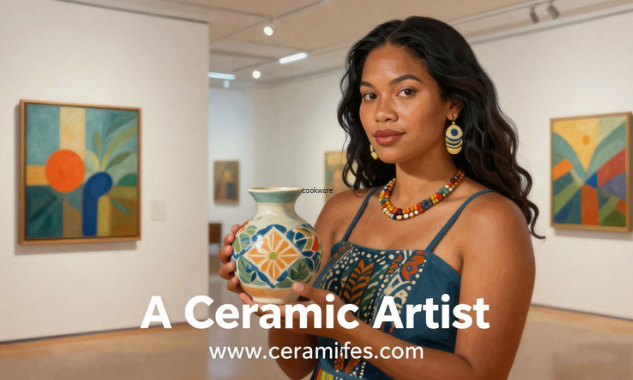
The daily work of a ceramic artist depends on their style, goals, and studio practice, but the process often includes a mix of creative and technical tasks.
A ceramic artist may spend time:
- Preparing clay
- Sketching ideas
- Throwing on the wheel
- Hand-building forms
- Sculpting details
- Trimming and refining shapes
- Applying texture
- Mixing or choosing glazes
- Loading and unloading kilns
- Testing surfaces and finishes
- Repairing failed pieces
- Photographing finished work
- Selling or exhibiting pieces
This is one reason ceramic art is so demanding.
It is not just design.
It is also chemistry, timing, structure, moisture control, heat management, and problem-solving.
A ceramic artist has to think like both an artist and a technician.
The Main Types of Work a Ceramic Artist Creates
Ceramic art covers a wide range of styles. Not every ceramic artist makes the same kind of work, and that variety is part of what makes the field so rich.
Functional Ceramics
This includes pieces made to be used in everyday life, such as:
- Mugs
- Bowls
- Plates
- Teapots
- Serving dishes
- Planters
- Pitchers
- Vases
Functional ceramic artists often focus on shape, comfort, balance, usability, and surface finish. Their work may still be artistic, but it is designed to live in the home and be handled regularly.
Sculptural Ceramics
Some ceramic artists work more like sculptors. They use clay to build forms that are expressive, abstract, figurative, symbolic, or narrative.
These works may explore:
- The human body
- Nature
- Memory
- Identity
- Architecture
- Social themes
- Pure form and texture
This kind of work is often shown in galleries, exhibitions, or collections.
Decorative Ceramics
Decorative ceramic work may include objects made primarily for visual impact rather than daily function. These pieces often emphasize color, texture, pattern, and surface design.
Installation and Conceptual Work
Some ceramic artists push far beyond traditional pottery and create larger-scale works for public spaces, exhibitions, or conceptual art settings. In these cases, clay becomes part of a bigger artistic language.
How a Ceramic Artist Works With Clay
Clay is the foundation of everything in ceramic art, but working with clay is not as simple as shaping mud and letting it dry.
A ceramic artist has to understand the material at every stage.
Clay changes constantly.
It can be:
- Wet and soft
- Leather-hard and carvable
- Bone-dry and fragile
- Fired and permanent
Each stage allows different actions. A piece might be built when soft, trimmed when firmer, decorated while still damp, then dried slowly before entering the kiln.
The process rewards patience.
Move too quickly, and the piece may crack. Dry it unevenly, and it may warp. Fire it carelessly, and the result may fail. Even glazing involves choices that can dramatically change the look and feel of the final work.
That is why ceramic art has such a strong relationship with time.
You cannot rush it very far without consequences.
Common Techniques Used by a Ceramic Artist
Ceramic artists do not all work the same way. Different techniques create different kinds of forms and expressions.
Wheel Throwing
This is the classic pottery-wheel method most people recognize. A lump of clay is centered on a spinning wheel and shaped by hand into forms such as bowls, cups, and vases.
Wheel throwing requires control, rhythm, and practice. It looks smooth when done well, but it takes a long time to master.
Hand-Building
Hand-building involves shaping clay without the wheel. This can include pinch pots, coil building, and slab construction.
Many ceramic artists love hand-building because it allows more freedom and a more direct relationship with the material.
Sculpting
Sculptural ceramic work often involves building forms by hand, carving details, assembling parts, and thinking in three dimensions much like a sculptor working in another medium.
Surface Decoration
A ceramic artist may decorate the surface using carving, stamping, painting, slip application, underglaze, texture tools, layering, and many other methods.
Glazing
Glaze adds color, texture, gloss, matte finish, and surface depth. It can completely transform a piece. Some ceramic artists use glaze subtly. Others use it as one of the main artistic features of their work.
Why the Kiln Matters So Much
The kiln is where ceramic art becomes ceramic art.
Before firing, clay remains fragile and reversible. A finished-looking piece can still break down in water or fall apart if mishandled. Firing changes that.
Inside the kiln, heat transforms the clay into a hardened material that will not return to mud. That transformation is what makes ceramics different from many other art forms.
It also adds risk.
A piece that looked perfect going into the kiln can crack, warp, blister, or come out completely different than expected. A glaze can shift color. A surface can melt more than planned. A form can slump.
This uncertainty is part of the medium.
A ceramic artist learns to control what they can, accept what they cannot, and keep testing until technique and vision come together.
A Ceramic Artist Is Both Creative and Technical
This is one of the most important things to understand.
People often romanticize ceramic art as pure creativity, but the truth is more demanding. A ceramic artist has to balance imagination with material knowledge.
They need to understand:
- Moisture
- Thickness
- Structure
- Drying time
- Clay body behavior
- Glaze response
- Firing temperature
- Surface compatibility
A strong idea alone is not enough. In ceramics, the idea has to survive the process.
That is what makes skilled ceramic artists so impressive. They are not only making beautiful work. They are navigating a medium that can resist them at every stage.
Why People Connect So Strongly With Ceramic Art
Ceramic art often feels more personal than people expect.
Part of that is because ceramics live close to daily life. A mug, bowl, vase, or plate is not distant. It can become part of a morning routine, a shared meal, or a quiet corner of a home. Even sculptural ceramic work often feels tactile and grounded.
There is also something ancient about clay.
Humans have shaped clay for thousands of years. That long history gives ceramic art a kind of continuity. When a ceramic artist works today, they are part of a very old tradition while still making something new.
That combination feels powerful.
Ceramic art can feel handmade, immediate, and timeless at once.
The Difference Between a Potter and a Ceramic Artist
These terms overlap, but they are not always identical.
A potter usually focuses more specifically on making vessels and functional wares such as mugs, bowls, plates, and vases. A ceramic artist may do that too, but the term often feels broader and more art-centered.
In practice:
- Every potter works in ceramics
- Not every ceramic artist is mainly a potter
A ceramic artist may create sculptural, conceptual, or installation-based work that has little to do with traditional pottery. That is why the broader term matters.
What Makes Someone a Good Ceramic Artist?
There is no single formula, but certain qualities show up again and again.
A strong ceramic artist usually has:
- Patience
- Material sensitivity
- Strong observational skills
- Technical discipline
- A clear visual voice
- Willingness to experiment
- Ability to accept failure and keep working
Failure is a big part of ceramics. Pieces crack. Glazes disappoint. Kilns surprise you. Good ceramic artists learn from that rather than being defeated by it.
They keep testing.
They keep refining.
They keep making.
How a Ceramic Artist Develops a Style
Style in ceramics does not appear overnight.
It usually grows through repetition, experimentation, and slowly learning what matters most to the artist.
A ceramic artist may begin by learning basics, copying forms, or practicing familiar techniques. Over time, they start developing preferences.
They may become drawn to:
- Certain shapes
- Certain textures
- Minimal surfaces
- Bold glaze effects
- Natural forms
- Figurative elements
- Earthy colors
- Refined symmetry
- Loose hand-built expression
As those choices repeat and deepen, a personal style begins to emerge.
That style is not just about appearance. It is also about how the artist thinks.
Why Ceramic Art Takes So Long
One reason people underestimate ceramic art is that they do not see how long the process takes.
A finished ceramic piece may require:
- Planning
- Building
- Drying
- Trimming
- Decorating
- Bisque firing
- Glazing
- Glaze firing
- Cooling
- Finishing
None of this happens instantly.
A piece may sit for days or longer between stages depending on thickness, weather, kiln schedules, and studio workflow. That time commitment is part of the medium.
Ceramic art teaches slowness whether you want it to or not.
A Ceramic Artist in the Modern World
Ceramic art has changed a lot in recent years.
Today, a ceramic artist may still work in a traditional studio, but they may also run an online shop, share process videos, teach workshops, take custom orders, collaborate with designers, or exhibit in contemporary art spaces.
That has expanded the field.
A ceramic artist today might be:
- A studio potter
- A gallery artist
- A product designer
- A workshop teacher
- A content creator
- A small business owner
- A sculptor
- A maker working across craft and fine art
This variety has helped more people discover ceramic work and appreciate the skill behind it.
Why Handmade Ceramic Work Matters
In a world filled with fast production and identical products, handmade ceramic work offers something different.
It offers variation.
It offers intention.
It offers the feeling that a real person made this object with time and care.
That matters to people.
A ceramic artist creates pieces that can carry small differences, marks of process, and signs of handwork that mass-produced items do not have. Those differences are not flaws. Often, they are the reason the piece feels alive.
That is why people are drawn to handmade ceramics even when cheaper factory-made options exist.
They are buying more than function.
They are buying presence.
Challenges a Ceramic Artist Faces
Ceramic art is rewarding, but it is not easy.
A ceramic artist often faces challenges such as:
- Material waste
- Cracking and breakage
- Unpredictable kiln results
- Time-intensive production
- Physical strain
- High studio costs
- Slow learning curves
- Finding a market for the work
That is part of why ceramic art deserves respect. The finished work can look calm and effortless, but the process behind it often includes a great deal of trial, failure, adjustment, and persistence.
Why the Work of a Ceramic Artist Still Feels So Relevant
Ceramic art remains relevant because it sits at a rare intersection.
It is old, but it still feels current.
It is functional, but it can also be deeply expressive.
It is tactile in an increasingly digital world.
People crave that.
They want objects that feel real. They want art that has weight, surface, texture, and presence. They want things that were made, not just manufactured.
A ceramic artist answers that need in a direct and powerful way.
Final Thoughts
A ceramic artist is not simply someone who makes clay objects.
A ceramic artist is someone who works with one of the oldest and most demanding materials in human history and turns it into something useful, expressive, beautiful, or unforgettable.
That work requires more than creativity.
It requires patience, technique, timing, and the ability to keep going even when the material does not cooperate.
That is part of what makes ceramic art so compelling.
It begins with earth, water, and touch. It passes through fire. And in the end, it becomes something that can last for years, sometimes much longer.
That is the quiet power of a ceramic artist.
FAQ
What is a ceramic artist?
A ceramic artist is someone who creates art or functional objects from clay using techniques such as shaping, sculpting, glazing, and firing.
Is a ceramic artist the same as a potter?
Not always. A potter usually focuses on functional vessels, while a ceramic artist may also create sculptural or conceptual work.
What does a ceramic artist make?
A ceramic artist can make mugs, bowls, plates, vases, sculptures, wall pieces, installations, and decorative objects.
Do ceramic artists use a pottery wheel?
Some do, but not all. Many also use hand-building, sculpting, carving, and other clay-forming techniques.
Why is ceramic art special?
Ceramic art combines creativity, touch, technical skill, and transformation through fire, which gives it a unique presence and permanence.
Is ceramic art functional or decorative?
It can be either one. Some ceramic art is meant to be used daily, while other pieces are made only for display or artistic expression.
Why does ceramic art take so long?
The process includes shaping, drying, firing, glazing, and cooling, and each stage takes time and care.
What skills does a ceramic artist need?
A ceramic artist needs creativity, patience, technical knowledge, material control, and the ability to learn through trial and error.
