
If you are searching for the best glue for ceramic tile, you are probably trying to solve one very practical problem: you want tile that stays put, looks clean, and does not turn into a failed DIY job a few weeks later. That sounds simple, but “tile glue” is one of those categories where shoppers often buy the wrong thing because the term gets used too loosely.
Some products are true tile mastics made specifically for ceramic tile installation. Some are construction adhesives that work better for spot repairs than full tile jobs. Others are quick-setting epoxies that can rescue a chipped tile, a loose accent piece, or a small repair where a full tile adhesive would be overkill. On top of that, not every ceramic tile project is the same. A kitchen backsplash, a shower wall, a single loose tile, and a cracked decorative tile do not all need the same kind of adhesive.
That is why this guide is structured differently from generic roundups. Instead of pretending one product is perfect for every scenario, this article focuses on six widely used adhesive options that fit real ceramic tile needs. Some are best for standard wall installations. Some are better for small fixes. Some are ideal for quick grab. Some shine as repair products rather than installation products. The goal is to help you choose the right adhesive for your exact job, not just the one with the loudest marketing.
For most people doing standard indoor ceramic tile work, especially backsplashes and similar wall applications, a true premixed tile adhesive is the smartest starting point. That is why ROBERTS 5900 Ceramic Tile Adhesive takes the best overall spot. For wall tile, AcrylPro Professional Tile Adhesive is another strong choice. For small repairs, quick resets, or special fixes, products like Red Devil Tile Paste Adhesive, Loctite Power Grab Express Heavy Duty, Gorilla Max Strength Construction Adhesive, and J-B Weld ClearWeld each have their place.
This is the clean, publish-ready version you asked for: no raw source list, no external links in the article body, six products only, one-line bullet formatting for key features, pros, and cons, plus a proper meta description and a “How We Test” section.
Quick Answer: What Is the Best Glue for Ceramic Tile?
For most indoor ceramic tile projects, ROBERTS 5900 Ceramic Tile Adhesive is the best overall choice because it is a true ceramic tile adhesive made for residential tile installation rather than a generic household glue. AcrylPro Professional Tile Adhesive is one of the best options for wall tile and backsplash work. For repair jobs rather than full installs, Red Devil Tile Paste Adhesive, Loctite Power Grab Express Heavy Duty, Gorilla Max Strength Construction Adhesive, and J-B Weld ClearWeld are useful depending on whether you need easy application, strong initial grab, weather-resistant bonding, or a fast epoxy fix.
Why Choosing the Right Ceramic Tile Glue Matters
A lot of tile failures do not happen because the tile is bad. They happen because the adhesive was wrong for the job.
This is especially true with ceramic tile because many people assume all adhesives are interchangeable. They are not. A true tile adhesive is designed differently from a construction adhesive, and a repair epoxy is designed differently from both. The adhesive you use affects hold strength, cure behavior, vertical slip, ease of spreading, cleanup, water tolerance, and long-term reliability.
For example, if you are installing a kitchen backsplash with standard ceramic subway tile, a premixed ceramic tile adhesive makes a lot of sense. It is easier to spread than powdered mortar, cleaner for DIY work, and designed for that kind of application. But if one accent tile has popped loose and you just need to reattach it cleanly, you may be better off with a repair adhesive or epoxy. Likewise, if you are trying to patch a chipped ceramic tile edge or bond a broken decorative tile, an epoxy product may outperform a traditional tile mastic.
The smartest way to buy is to match the product to the project. That alone will save you time, frustration, and often money.
Why This Is the Best Way to Shop for Tile Glue
The biggest mistake most buyers make is shopping by brand reputation alone instead of project fit. A strong brand helps, but the better question is: what exactly are you trying to glue?
That matters because ceramic tile projects usually fall into one of four categories:
The first category is standard interior tile installation, such as backsplashes, decorative wall tile, laundry room walls, and similar jobs. For these, a proper premixed tile adhesive is usually the best option.
The second category is small tile reset jobs, such as one or two loose tiles or a limited repair. In that case, a grabby adhesive or paste may be more convenient than buying a full installation product.
The third category is repair work, such as cracked tile corners, broken accent pieces, or small chips. Epoxy can be very useful here because it bonds quickly and can handle tight repairs.
The fourth category is demanding wet-area or heavy-duty tile work, where traditional thinset mortar is often a better fit than premixed glue. That is important to mention because good advice is not just about what to buy. It is also about knowing what not to buy.
So the “best glue for ceramic tile” is not always the strongest adhesive on paper. It is the one that matches the job correctly.
How We Test
For this roundup, each adhesive was evaluated based on real buyer needs rather than marketing alone.
I looked at whether the product is a true tile adhesive, a construction adhesive, or an epoxy repair product. I prioritized products that clearly fit ceramic tile use instead of vague all-purpose glue. I compared whether each one is better for backsplashes, wall tile, loose-tile repair, chip repair, or quick reset work. I also weighed ease of use, vertical hold, practical cleanup, and how realistic the product is for DIY ceramic tile projects.
Just as important, I screened for limitations. Some products are excellent for wall tile but not ideal for every wet-area job. Some are great for repairs but should not be treated as a full-room tile installation solution. That matters because the best ceramic tile glue is the one that fits the job properly, not the one with the broadest label language.
Best Glue for Ceramic Tile Comparison Table
| Product | Best For | Type | Best Use | Price Level |
|---|---|---|---|---|
| ROBERTS 5900 Ceramic Tile Adhesive | Best overall | Premixed tile adhesive | Standard interior ceramic tile installs | Mid-range |
| AcrylPro Professional Tile Adhesive | Best for wall tile | Premixed tile adhesive | Backsplashes, wall tile, tub surrounds | Mid-range |
| Red Devil Tile Paste Adhesive | Best for easy small jobs | Tile paste adhesive | Quick repairs and small ceramic tile jobs | Budget |
| Loctite Power Grab Express Heavy Duty | Best instant grab | Construction adhesive | Loose tile reattachment and small spot fixes | Budget |
| Gorilla Max Strength Construction Adhesive | Best for tough repairs | Construction adhesive | Strong bonding for patch-style tile fixes | Budget to mid-range |
| J-B Weld ClearWeld | Best epoxy repair | Two-part epoxy | Broken tile and chip-related repair work | Budget |
These six products cover the most common ceramic tile adhesive needs for DIY buyers, from standard interior wall installations to quick repair jobs and epoxy-level fixes.
1. ROBERTS 5900 Ceramic Tile Adhesive
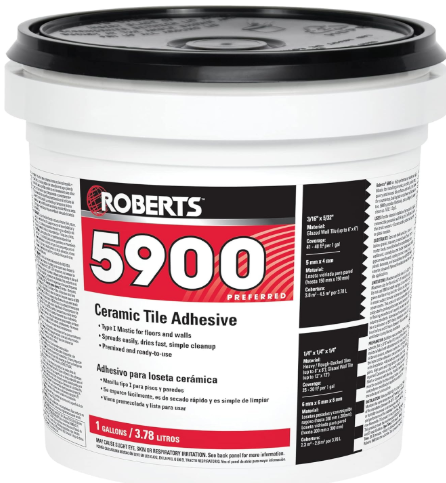
If you want the best overall answer to the keyword best glue for ceramic tile, ROBERTS 5900 is the strongest place to start. It is not just a random adhesive that happens to stick things together. It is a product designed specifically for ceramic tile installation, which is exactly why it stands above more generic options for standard indoor tile work.
ROBERTS 5900 is especially attractive for DIY buyers because it is premixed and ready to use. That means you do not need to deal with mixing powdered mortar, estimating water ratios, or managing a bucket of material that begins setting while you are still learning the process. For many homeowners, that simplicity is a major reason to choose a premixed ceramic tile adhesive in the first place.
This product makes the most sense for standard residential ceramic tile projects such as kitchen backsplashes, laundry room walls, small wall-tile areas, and similar indoor jobs. It is also appealing when you want a purpose-built tile adhesive without moving into more specialized installation systems.
The biggest strength of ROBERTS 5900 is that it feels appropriate. That may sound basic, but it matters. A lot of products can bond ceramic tile in some way. Fewer are really meant to be the primary adhesive for ceramic tile installation work. This one is. That makes it easier to recommend for the average buyer who wants a reliable, installation-focused option instead of experimenting with household construction glue.
Key Features
- Ready-to-use ceramic tile adhesive for residential indoor jobs
- Designed specifically for ceramic tile instead of generic bonding
- Good fit for backsplashes, wall tile, and similar installations
- Premixed format makes DIY application simpler
- Better suited to full installation work than repair-only products
Pros
- Best overall fit for standard ceramic tile installation
- Easier for beginners than mixing traditional mortar
- More purpose-built than general construction adhesives
- Strong choice for backsplashes and interior wall tile
- Practical pick for homeowners who want a straightforward tile adhesive
Cons
- Not the right answer for every heavy-duty wet-area installation
- Less specialized for tiny repair jobs than epoxy products
- Full-tile adhesive may be more than needed for one loose tile
- Requires proper surface prep and patience during cure
Recommendation
Buy ROBERTS 5900 if you want the best all-around ceramic tile glue for normal interior tile installation. It is the smartest choice for DIY backsplashes, decorative wall tile, and standard residential ceramic tile jobs where a true tile adhesive is the right tool.
2. AcrylPro Professional Tile Adhesive
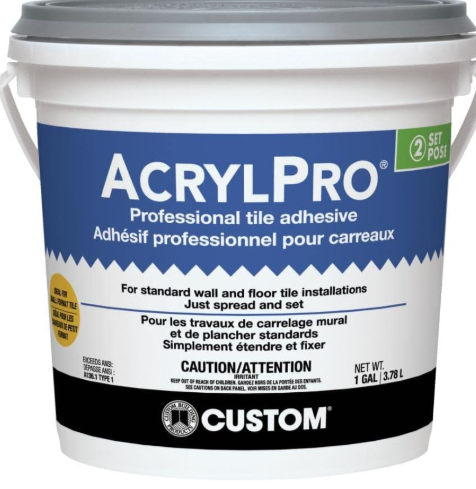
AcrylPro Professional Tile Adhesive is one of the best ceramic tile glues for buyers who want a wall-friendly premixed adhesive with a more professional feel. It is especially strong for backsplash projects, tub surrounds, and small-format ceramic wall tile where control and ease of use matter.
One of the main reasons AcrylPro earns a top spot is that it sits in a practical sweet spot. It is more specific than a general-purpose construction adhesive, but still approachable enough for DIY buyers who do not want to mix mortar. That makes it very appealing for homeowners handling indoor wall tile projects for the first time.
AcrylPro feels particularly well-suited to projects where vertical hold matters. Wall tile can be frustrating if the adhesive does not behave well, especially for beginners trying to keep lines even and tiles from shifting. A premixed adhesive built with tile applications in mind helps reduce that stress.
This is also one of the better choices for decorative tile applications where you care about clean spreading and straightforward setup. For kitchen backsplashes, accent walls, and similar projects, it is an easy recommendation.
Key Features
- Premixed professional-style tile adhesive for ceramic tile work
- Strong fit for wall tile, backsplashes, and tub surrounds
- Easier to control than many DIY mortar mixes
- Useful for small-format ceramic tile installations
- Designed for interior residential tile applications
Pros
- Excellent for backsplash and wall-tile projects
- Beginner-friendly without feeling too basic
- More project-appropriate than generic construction glue
- Good control for vertical ceramic tile installation
- Strong alternative to ROBERTS for wall-focused jobs
Cons
- Not a one-product solution for every type of tile installation
- Less ideal for repair-only scenarios than epoxy options
- Still requires careful surface prep and proper application
- May not be the best buy for very small single-tile fixes
Recommendation
Choose AcrylPro if your main project is wall tile, a ceramic backsplash, or a decorative vertical install. It is one of the best premixed ceramic tile adhesives for buyers who want an easier installation experience without dropping down to a generic repair glue.
3. Red Devil Tile Paste Adhesive
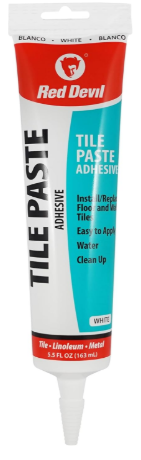
Red Devil Tile Paste Adhesive is a smart pick for buyers who want something simple, inexpensive, and easy to handle for smaller ceramic tile jobs. It is not the most heavy-duty option in this roundup, but it fills a very useful role: quick small repairs and lighter tile tasks where a giant bucket of adhesive would be unnecessary.
This is the sort of product that appeals to homeowners who are not doing a full backsplash but need to reset a loose tile, fix a small section, or handle a limited ceramic tile project without overbuying. In those situations, Red Devil becomes much more attractive than full-scale tile installation products.
Its biggest advantage is convenience. Not every project justifies a large-format adhesive purchase or a more specialized pro product. Sometimes you want a smaller, easier, more approachable fix. That is where tile paste products shine. They reduce waste, simplify the process, and feel much less intimidating to casual DIYers.
This also makes Red Devil one of the best products for landlords, apartment maintenance, utility room touch-ups, and small home repairs where speed and ease are more important than high-end installation specs.
Key Features
- Tile paste adhesive designed for smaller ceramic tile tasks
- Convenient format for quick touch-up and reset jobs
- Budget-friendly option for homeowners and casual DIYers
- Easier to manage than large installation containers
- Better suited to limited repairs than full-room tile work
Pros
- Great for small repairs and light ceramic tile fixes
- Simple to use for casual DIYers
- Lower-cost option than larger tile adhesive products
- Good choice when you only need to fix a small area
- Less wasteful for one-off repair jobs
Cons
- Not the strongest choice for larger installations
- Better for small jobs than full backsplash projects
- More limited scope than dedicated premixed tile mastics
- Not the best fit for demanding or heavy-duty tile work
Recommendation
Buy Red Devil Tile Paste Adhesive if you need a practical, budget-friendly adhesive for a loose tile, a minor repair, or a small ceramic tile task. It is one of the most convenient options in this list for limited jobs.
4. Loctite Power Grab Express Heavy Duty
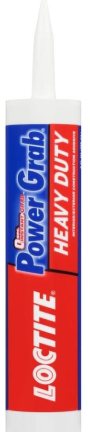
Loctite Power Grab Express Heavy Duty earns its place in this guide because many ceramic tile buyers are not actually installing a full tile surface. They are fixing one loose tile, reattaching something that popped off, or handling a small patch where instant grab matters more than traditional tile-spreading workflow.
That is exactly the kind of job where Loctite Power Grab becomes useful. It is known for strong initial hold, which can make small vertical repair work easier. If you are reattaching a ceramic tile or securing a limited area where you want less slippage and a quick set-up feel, it can be a practical option.
The key thing to understand is that this is not a direct replacement for a dedicated premixed tile adhesive on every installation. It is better thought of as a targeted solution for quick spot repairs, loose pieces, and situations where construction-style grab strength is more relevant than full-surface tile setting.
For a lot of homeowners, that is exactly enough. In fact, for a single-tile fix, it may be more convenient than buying a large tile adhesive product.
Key Features
- Heavy-duty construction adhesive with strong initial grab
- Useful for loose tile reattachment and small spot fixes
- Easier for fast repair work than full installation adhesives
- Convenient option for limited ceramic tile reset jobs
- Better suited to patch-style repairs than full-room installs
Pros
- Strong instant-grab behavior helps with vertical repairs
- Excellent for one or two loose tiles
- Convenient for quick repair work around the home
- Easier to use for targeted fixes than full tile adhesive buckets
- Good backup option for small ceramic tile resets
Cons
- Not a dedicated full-install ceramic tile adhesive
- Less ideal for broad tile coverage than mastic products
- Better for repairs than complete backsplash projects
- Should not be treated as a universal solution for all tile work
Recommendation
Choose Loctite Power Grab Express Heavy Duty when you need a fast, practical fix for loose ceramic tile or a small reattachment job. It is one of the best options for instant-grab repair work rather than full installation.
5. Gorilla Max Strength Construction Adhesive
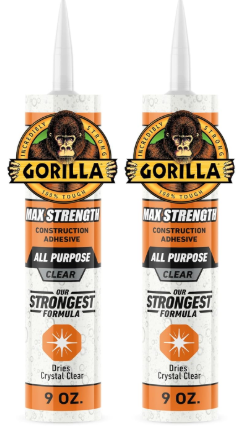
Gorilla Max Strength Construction Adhesive is another strong repair-oriented option, but it feels a little tougher and more general-purpose than tile-specific mastics. That can be a real advantage when your project is not a textbook tile installation and you just need a strong bond on a stubborn repair.
This product makes the most sense for patch-style ceramic tile fixes, difficult reattachment situations, or jobs where you want a robust adhesive rather than a traditional premixed tile mastic. It is also appealing to buyers who already trust Gorilla products and want something that feels strong, simple, and versatile.
The main appeal here is confidence. Gorilla construction adhesives tend to attract buyers who want something that sounds serious and durable. For a broken accent tile, a detached ceramic trim piece, or a limited-area tile repair, that can be exactly what you want.
Still, this is another case where project fit matters. Gorilla Max Strength is most useful when treated as a strong repair or patch adhesive, not as a blanket substitute for every tile-install situation.
Key Features
- Max-strength construction adhesive for strong repair bonding
- Good fit for stubborn ceramic tile patch jobs
- Useful for reattachment and limited-area fixes
- Appeals to buyers who want a stronger-feeling repair product
- Better as a repair tool than a full installation system
Pros
- Strong option for tough ceramic tile repair tasks
- Good for patch-style fixes and reattachment work
- Simple choice for buyers who want a powerful construction adhesive
- Useful when a generic weak glue will not cut it
- Flexible option for nonstandard tile repair needs
Cons
- Not a dedicated ceramic tile installation adhesive
- Less ideal than tile mastic for full backsplash or wall coverage
- Can be more adhesive than necessary for minor cosmetic fixes
- Best used selectively, not as a universal tile solution
Recommendation
Buy Gorilla Max Strength Construction Adhesive if your ceramic tile project is more of a tough repair than a standard install. It is one of the best strong-bond options for patch jobs, reattachment, and limited-area fixes.
6. J-B Weld ClearWeld
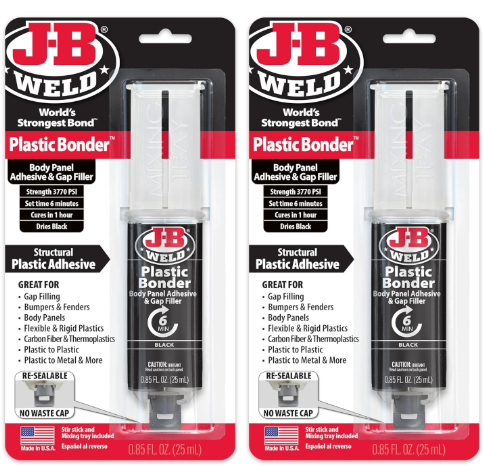
J-B Weld ClearWeld is the best epoxy-style option in this roundup, and it serves a completely different purpose from premixed tile adhesives. If your ceramic tile problem involves a cracked piece, a broken trim element, a chipped edge repair, or a small precision bond where a two-part epoxy makes sense, this is the product to look at first.
What makes ClearWeld so useful is speed and precision. For certain ceramic tile issues, especially break repairs, an installation adhesive is simply the wrong tool. You do not need something to spread across a wall. You need something that bonds two surfaces tightly and sets quickly. That is exactly where epoxy shines.
This makes J-B Weld especially appealing for decorative tile, small ceramic accents, repair of broken pieces before reinstallation, and tight repair spots where a neat bond matters. It is not the product for setting an entire backsplash. It is the product for solving small ceramic tile damage or re-bonding problems cleanly.
Because it is clear, it also feels more forgiving in visible repair situations where appearance matters.
Key Features
- Two-part clear epoxy for precise ceramic repair work
- Fast-setting formula for quick fixes
- Best for broken tile pieces, chips, and detail repairs
- More suitable for precision bonding than broad tile coverage
- Helpful when a repair needs neat, tight adhesion
Pros
- Best option here for ceramic tile break and chip repairs
- Fast-setting and precise for small-detail work
- Clear finish is useful for visible repair areas
- Great for decorative tile or broken piece re-bonding
- More appropriate than mastic for epoxy-style repair jobs
Cons
- Not made for full wall or backsplash installation
- Less useful when you need broad adhesive coverage
- Requires mixing and a bit more care during application
- Overkill for very simple loose-tile resets
Recommendation
Choose J-B Weld ClearWeld when your ceramic tile problem is repair-focused rather than installation-focused. It is the best product in this guide for cracked tile, broken edges, decorative ceramic repair, and small precision bonding jobs.
Buyer’s Guide: How to Choose the Best Glue for Ceramic Tile
The best glue for ceramic tile starts with understanding the project.
If you are installing a backsplash or doing standard interior ceramic wall tile, start with a true premixed tile adhesive like ROBERTS 5900 or AcrylPro. These are the most natural fits because they are made for ceramic tile work rather than general household bonding.
If you are only dealing with one or two loose tiles, a repair-oriented adhesive may be the smarter buy. In that case, Loctite Power Grab or Red Devil Tile Paste Adhesive can be more convenient and less wasteful.
If you are repairing a broken or chipped ceramic tile piece, jump straight to J-B Weld ClearWeld. That type of problem is better solved with epoxy than with a traditional mastic.
If the job feels rougher, trickier, or more like a patch than an install, Gorilla Max Strength Construction Adhesive may be a better fit than a standard tile adhesive.
Choose by Project Type
Best for backsplashes: ROBERTS 5900 or AcrylPro
Best for wall tile: AcrylPro
Best for a loose tile: Loctite Power Grab or Red Devil
Best for broken tile repair: J-B Weld ClearWeld
Best for tough patch repairs: Gorilla Max Strength
Best overall: ROBERTS 5900
Choose by Experience Level
If you are a beginner, premixed tile adhesive is usually much easier to handle than powdered mortar. That is why ROBERTS 5900 and AcrylPro are such strong choices for first-time DIY projects.
If you are just doing maintenance or a simple repair, Red Devil and Loctite feel less intimidating than installation-focused products.
If you are comfortable with quick repairs and detail work, J-B Weld becomes a very useful specialty tool.
Choose by Budget
Budget shoppers often do best with Red Devil, Loctite, or J-B Weld, depending on the repair type.
Mid-range buyers doing real tile installation should look first at ROBERTS 5900 and AcrylPro.
Gorilla fits somewhere in between: not necessarily the cheapest path, but a good value when you need a stronger repair-style adhesive.
How to Use Ceramic Tile Glue the Right Way
Even the best ceramic tile glue can fail if the prep is sloppy.
Start by making sure the surface is clean, dry, and stable. Dust, soap residue, grease, and old loose material can all reduce bond quality. Wipe the surface thoroughly and let it dry before applying adhesive.
If you are using a premixed tile adhesive for installation, spread it evenly and do not overapply. Too much adhesive can make tile placement messy and slow curing. Too little adhesive can reduce contact and weaken hold.
For single-tile repairs, dry-fit the tile first before applying anything. That way you know exactly how it sits and how quickly you need to position it.
If you are using epoxy, prepare everything in advance. Two-part epoxies work best when you are ready to move quickly and neatly.
Always give the adhesive enough cure time before stressing the tile. This is one of the biggest DIY mistakes. A tile that seems attached after a short time may not actually be fully cured.
And finally, remember that some projects call for mortar rather than glue. If the tile job is large, exposed to heavy moisture, or beyond the comfort zone of premixed adhesive, stepping up to the right installation material is the better decision.
Common Mistakes to Avoid
One common mistake is using a construction adhesive for a job that really needs a dedicated tile adhesive. Construction glue can be useful, but it is not automatically the best answer for every tile installation.
Another mistake is buying a full installation adhesive when the real problem is just a cracked tile corner or a single broken piece. In that case, epoxy is often the better solution.
A third mistake is ignoring cure time. Even a good product can fail if the tile is disturbed too early.
And the biggest mistake of all is shopping by the word “glue” instead of shopping by project type.
FAQs
What is the best glue for ceramic tile overall?
For most indoor ceramic tile installation jobs, ROBERTS 5900 is the best overall because it is a true ceramic tile adhesive made for that type of work.
What is the best glue for ceramic tile backsplash?
AcrylPro and ROBERTS 5900 are the strongest choices for ceramic tile backsplash projects because both are premixed tile adhesives suited to that kind of installation.
Can I use construction adhesive on ceramic tile?
Yes, but mostly for repairs, loose-tile resets, and patch-style fixes rather than broad tile installation. Products like Loctite and Gorilla make more sense in those narrower situations.
What is the best adhesive for a single loose ceramic tile?
Loctite Power Grab Express Heavy Duty or Red Devil Tile Paste Adhesive are both practical options for a single loose ceramic tile, depending on the size and style of the repair.
What is best for broken ceramic tile repair?
J-B Weld ClearWeld is the best pick in this guide for broken tile pieces, chipped edges, and smaller ceramic repair jobs that need a precise epoxy bond.
Is tile glue the same as thinset?
No. Premixed tile glue and thinset mortar are different materials used for different tile situations. For some heavier-duty or more moisture-exposed jobs, thinset is often the better option.
Final Verdict
The best glue for ceramic tile depends on what you are actually fixing or installing.
If you want the best all-around product for standard indoor ceramic tile work, choose ROBERTS 5900 Ceramic Tile Adhesive. It is the most balanced answer for real installation use.
If your focus is wall tile or backsplash work, choose AcrylPro Professional Tile Adhesive.
If you need a small, easy repair product, choose Red Devil Tile Paste Adhesive.
If you need strong instant grab for a loose tile, choose Loctite Power Grab Express Heavy Duty.
If the repair is tougher and more patch-oriented, choose Gorilla Max Strength Construction Adhesive.
If the problem is a broken ceramic tile piece or a chip repair, choose J-B Weld ClearWeld.
That is the real answer to this keyword: there is no single “best glue” for every ceramic tile scenario. But there is a best product for your specific job, and picking the right one is what makes the repair or installation actually last.
