
If you are asking is ceramic like glass, the short answer is yes, ceramic is like glass in some ways, but they are not the same material. They share a few important traits, such as hardness, brittleness, and common use in household products, but they are made differently and behave differently in real-world use.
That is where people often get confused.
Ceramic and glass can both look smooth, glossy, and fragile. Both are used in dishes, tiles, mugs, decorative objects, and home surfaces. Both can break if dropped. Both can handle heat better than many plastics. Because of that, they often seem closely related. But once you look deeper, the differences become clear.
Ceramic is usually made from clay and minerals that are shaped and fired at high temperatures. Glass is usually made by melting materials like silica into a smooth transparent or translucent solid. Ceramic tends to be more opaque, often more heat-stable in certain uses, and more varied in texture and structure. Glass tends to be smoother, more transparent, and often more vulnerable to certain kinds of breakage, depending on the product.
So, is ceramic like glass? Yes, they are similar in some practical ways, but they are still different materials with different strengths and weaknesses.
This guide explains what ceramic and glass have in common, how they differ, where each one works best, and whether one is better than the other.
Short Answer
Yes, ceramic is somewhat like glass because both are hard, brittle, non-metallic materials often used in household products and foodware. However, ceramic and glass are not the same. Ceramic is usually made from clay-based materials fired into a solid form, while glass is made by melting silica-based materials into a smooth solid. Ceramic is usually more opaque and often more heat-stable in cookware and tile, while glass is often smoother, more transparent, and visually different in use.
Why Ceramic and Glass Seem Similar
Ceramic and glass seem similar because they share several obvious qualities.
Both are often:
- hard
- smooth
- brittle
- easy to clean
- heat resistant in many uses
- used in kitchens and homes
- available in glossy finishes
That is why people compare them so often.
For example, both ceramic and glass are commonly used for:
- plates
- bowls
- mugs
- decorative pieces
- bakeware
- tiles
- household surfaces
If you only judge them by appearance or by the fact that both can shatter when dropped, they can seem almost alike. But their structure and performance are not identical.
What Ceramic Actually Is
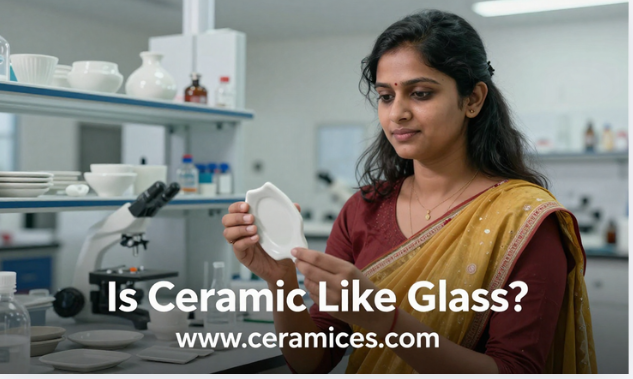
Ceramic is a broad material family made from natural minerals, usually clay and similar substances, that are shaped and then fired at high temperatures.
Common ceramic categories include:
- earthenware
- stoneware
- porcelain
- ceramic tile
- ceramic cookware
- ceramic dinnerware
Ceramic can be:
- glossy
- matte
- rough
- polished
- thick
- thin
- decorative
- highly practical
A glaze is often added to make ceramic smoother, shinier, and easier to clean.
That is one reason some ceramic products look a little glass-like on the surface.
What Glass Actually Is
Glass is a separate material, usually made by melting silica-based ingredients into a smooth non-crystalline solid. Unlike most ceramics, glass is usually associated with:
- transparency
- a very smooth surface
- a more uniform appearance
- a more obviously glassy shine
Common glass products include:
- drinking glasses
- windows
- glass bowls
- storage containers
- glass bakeware
- decorative pieces
So while ceramic and glass can sometimes seem similar, the way they are formed and the way they look are often different from the start.
So, Is Ceramic Like Glass?
Yes, ceramic is like glass in some practical ways, but it is not the same.
They are alike because both are:
- hard
- brittle
- widely used in homes
- easy to clean
- often good with heat
- non-metallic
- common in food and home products
They are different because:
- ceramic is usually clay-based and fired
- glass is usually silica-based and melted
- ceramic is often opaque
- glass is often transparent or translucent
- ceramic usually has more variety in surface feel
- glass usually has a more obviously smooth and uniform appearance
So the most accurate answer is: ceramic is somewhat like glass, but not identical in material or behavior.
Main Similarity #1: Both Are Hard but Brittle
This is probably the biggest thing they have in common.
Ceramic and glass are both known for being hard surfaces that can still break under impact. That means:
- they resist scratching better than some softer materials
- they often feel solid and stable
- they can crack or shatter when dropped
That combination of hardness and brittleness is one of the main reasons people group them together.
A ceramic plate dropped on a tile floor may break. A glass bowl dropped on the same floor may also break.
That similarity is real.
Main Similarity #2: Both Are Common in Kitchens
Ceramic and glass are both heavily used in food-related products.
You will often see both materials used in:
- dinnerware
- mugs
- baking dishes
- serving bowls
- food containers
- kitchen décor
That shared everyday presence makes them feel more similar than they really are from a materials science point of view.
For the average person, both belong to the category of “hard kitchen materials that are easy to wash and can break if dropped.”
Main Similarity #3: Both Can Handle Heat Well
Ceramic and glass are both often used in hot-food environments.
For example:
- ceramic mugs hold hot coffee
- glass mugs can hold hot tea
- ceramic dishes can go in ovens in some cases
- glass bakeware is also common
This makes both materials feel more capable and more stable than things like thin plastic.
Still, the way they respond to heat is not always the same, which is where an important difference shows up.
Main Difference #1: Ceramic Is Usually More Opaque
One of the easiest ways to tell ceramic and glass apart is appearance.
Ceramic is usually:
- opaque
- more earthy in feel
- more varied in texture
- more often finished with glaze or color
Glass is usually:
- transparent
- translucent
- visually cleaner or clearer
- more obviously shiny in a glass-like way
This is why a ceramic mug and a glass mug may serve similar purposes but feel very different in design and experience.
Main Difference #2: They Are Made Differently
This is the most important technical difference.
Ceramic
Ceramic is usually made by shaping clay or mineral-based material and then firing it in a kiln.
Glass
Glass is usually made by melting silica-based ingredients until they become a smooth liquid-like material, then cooling it into shape.
This difference in formation affects:
- texture
- structure
- appearance
- transparency
- behavior under stress
So even if they seem similar in use, they are not created in the same way.
Main Difference #3: Ceramic Often Feels More Solid and Less Visually Fragile
Even though ceramic can break, it often feels more substantial or less visibly delicate than glass.
A thick ceramic bowl often feels:
- sturdy
- solid
- grounded
- heavier in character
A glass bowl often feels:
- sleek
- delicate
- more visibly breakable
- lighter in look, even when not light in weight
This is not always about actual strength. It is often about how the material presents itself.
That is one reason some people prefer ceramic for everyday dinnerware and glass for storage or serving.
Main Difference #4: Glass Is More Common for Transparency
If you need to see through the material, glass is the natural choice.
That is why glass is used for:
- windows
- measuring cups
- food storage containers
- drinkware
- display items
Ceramic is not used that way because it is usually not transparent.
So even though ceramic is like glass in some ways, it cannot fill every role glass fills.
Main Difference #5: Ceramic Is Often Better for Certain Heat Applications
Ceramic is often preferred for:
- mugs
- tile
- some cookware surfaces
- certain bakeware
- fireplace surrounds
- hot styling tools
This is because ceramic often performs very well in heat-related uses and can feel more stable in those categories.
Glass can also handle heat in many products, especially when made for that purpose, but it can be more sensitive to thermal shock in some situations. That is why people often treat hot glass items with a bit more caution.
So in some practical household uses, ceramic feels tougher around heat even if both materials are heat resistant in the right form.
Is Ceramic Stronger Than Glass?
This depends on what kind of strength you mean.
Ceramic May Be Better At:
- certain heat applications
- surface hardness
- long-term use in tile and fixtures
- handling wear in some household products
Glass May Be Better At:
- transparency
- visual uniformity
- some flexible design uses
- certain engineered forms like tempered glass
In ordinary household life, both can break. So neither one should be thought of as universally stronger in every way.
The better answer is that they are strong in different ways and weak in different ways.
Is Ceramic Safer Than Glass?
Again, it depends on the use.
Ceramic Can Feel Safer For:
- hot mugs
- plates
- tile
- bathroom fixtures
- everyday dinnerware
Glass Can Feel Safer For:
- seeing food contents
- storage containers
- measuring
- neutral presentation of food
Both are common and generally safe when made for their intended use. The real risk with both is usually breakage, especially if chipped or cracked.
So ceramic is not automatically safer than glass, but it is often preferred for some everyday uses because it feels less delicate.
Is Ceramic Better Than Glass for Dinnerware?
Many people would say yes, but it comes down to preference.
Ceramic dinnerware is often preferred because it:
- feels classic
- has a warmer appearance
- comes in more textures and styles
- often feels more substantial
- fits casual and formal tables well
Glass dinnerware is often preferred because it:
- looks clean and modern
- feels visually lighter
- shows contents clearly
- can look elegant in a different way
So ceramic is not necessarily better, but it is often the more traditional and widely chosen dinnerware material.
Is Ceramic Better Than Glass for Bakeware?
This depends on what you are baking and what you like.
Ceramic Bakeware Is Often Loved For:
- attractive oven-to-table serving
- heat retention
- casseroles
- baked pasta
- desserts
- homey presentation
Glass Bakeware Is Often Loved For:
- seeing the food while it bakes
- familiar kitchen use
- easy monitoring of browning from the side
- practical utility
Both are useful. Ceramic often wins on presentation, while glass often wins on visibility.
Is Ceramic More Durable Than Glass?
In some daily-use categories, ceramic can feel more durable. For example:
- ceramic tile
- ceramic sinks
- ceramic toilets
- ceramic mugs
- ceramic dinnerware
often feel built for heavy regular life.
Glass, while practical, can feel more delicate in some of those same uses.
But durability still depends on the exact product. A well-made glass item can outlast a poor ceramic one, and vice versa.
So ceramic is not always more durable than glass, but in many common household products it often feels that way.
Why Ceramic Sometimes Looks Like Glass
Some ceramic products can look surprisingly glass-like because of their glaze.
A glaze can make ceramic:
- shiny
- smooth
- reflective
- sealed
- easier to clean
That glossy glazed layer can look almost glassy, especially on mugs, bowls, or tiles.
This is one reason people ask whether ceramic is like glass in the first place. The surface can appear similar even when the underlying material is different.
Is Porcelain Like Glass?
Porcelain is a type of ceramic, and among ceramics it is one of the most refined and dense. It can sometimes seem even more glass-like because it is:
- smooth
- hard
- elegant
- often bright and glossy
- more refined in finish
Even so, porcelain is still ceramic, not glass.
So yes, some types of ceramic can feel more glass-like than others, but they are still not literally the same material.
Common Myths About Ceramic and Glass
Myth 1: Ceramic and Glass Are the Same Thing
False. They can seem similar, but they are different materials.
Myth 2: If It Is Shiny, It Must Be Glass
False. Glazed ceramic can also be very shiny.
Myth 3: Ceramic Is Always Stronger Than Glass
False. Strength depends on the product and type of use.
Myth 4: Glass Is Always More Fragile Than Ceramic
False. Both can be fragile in different ways.
Myth 5: Ceramic Cannot Be Smooth Like Glass
False. Many glazed ceramics have very smooth surfaces.
Final Verdict
So, is ceramic like glass?
Yes, ceramic is like glass in some ways. Both are hard, brittle, easy to clean, and common in kitchens and homes. Both can handle heat in many applications, and both can break if dropped. That makes them similar in practical everyday life.
But no, they are not the same material. Ceramic is usually clay-based and fired, while glass is usually silica-based and melted. Ceramic is usually more opaque and varied in texture, while glass is usually transparent and more visually uniform.
The easiest way to think about it is this: ceramic and glass are similar household material cousins, but they are not identical.
Frequently Asked Questions
1. Is ceramic the same as glass?
No. Ceramic and glass are different materials, even though they share some similar traits.
2. Is ceramic like glass?
Yes, in some ways. Both are hard, brittle, and common in household products.
3. What is the main difference between ceramic and glass?
Ceramic is usually clay-based and fired, while glass is usually silica-based and melted.
4. Is ceramic stronger than glass?
Not always. It depends on the product and the kind of stress involved.
5. Is ceramic more heat resistant than glass?
Often ceramic feels more stable in many heat-related uses, though both can handle heat when designed for it.
6. Why does ceramic sometimes look like glass?
Glazed ceramic can have a shiny, smooth, glass-like surface.
7. Is porcelain like glass?
Porcelain can seem glass-like because it is smooth and refined, but it is still ceramic.
8. Is ceramic better than glass for dishes?
Many people prefer ceramic for dinnerware, but both can work well depending on style and preference.
9. Does ceramic break like glass?
Yes, ceramic can break or chip when dropped, just like glass can.
10. Should I think of ceramic as a type of glass?
No. It may feel similar in some ways, but it is a different material family.
Conclusion
If you have been wondering is ceramic like glass, the best answer is yes and no. Yes, they share a lot of practical similarities. They are both hard, breakable, easy to clean, and widely used in homes. But no, they are not the same material, and they do not behave exactly the same in use.
Ceramic is usually more opaque, more earthy, and often more varied in texture and finish. Glass is usually more transparent, smoother-looking, and more visibly glassy. Both are useful. Both are common. Both can be great choices depending on the product.
In the end, ceramic is like glass in broad household terms, but it remains its own material with its own strengths and identity.
