
If you are asking what is ceramic slip, the simple answer is that ceramic slip is clay mixed with water until it becomes a smooth liquid or creamy suspension. In pottery and ceramics, slip is used for several important purposes, including decorating surfaces, joining clay pieces together, casting in molds, and adjusting clay consistency during making.
So if you want the shortest possible answer, here it is:
- Ceramic Slip Is Liquid Clay.
That is the core idea.
But in real ceramic practice, slip is more than just watery clay. It can be thick or thin, plain or colored, functional or decorative, and its exact use depends on how the potter prepares it. This is why slip is such a fundamental material in ceramics. It shows up in handbuilding, wheel work, slip casting, decorating, and repair.
This guide explains exactly what ceramic slip is, what it is made of, how it is used, and why it matters so much in pottery and ceramics.
What Is Ceramic Slip? The Direct Answer
The clearest answer is:
- Ceramic Slip Is A Mixture Of Clay And Water Made Thin Enough To Pour, Brush, Trail, Or Spread.
It usually has a smooth, creamy, mud-like consistency. Depending on the purpose, slip may be:
- Thin And Pourable
- Thick And Creamy
- Plain Clay Color
- Colored With Stains Or Oxides
- Used For Building
- Used For Decoration
- Used For Casting
So while the basic definition is simple, the uses are broad.
What Is Ceramic Slip Made Of?
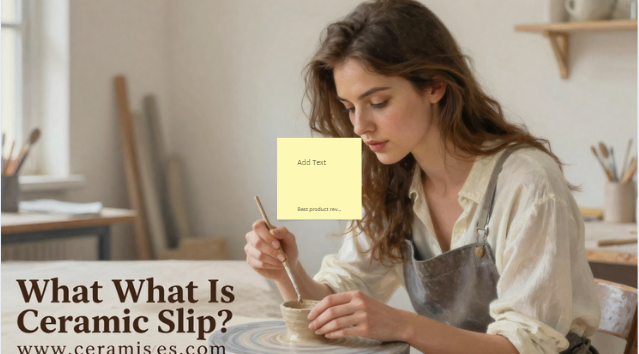
Ceramic slip is usually made from:
- Clay
- Water
That is the basic recipe.
Sometimes slip may also include:
- Deflocculants In Slip Casting
- Colorants
- Oxides
- Mason Stains
- Other Additives For Specific Purposes
But in ordinary studio use, the basic idea remains the same:
- Slip Is Clay Particles Suspended In Water.
The exact thickness depends on how much water is added and what the slip is meant to do.
Why Slip Is Called Liquid Clay
Slip is often described as liquid clay because that is exactly what it behaves like. It is not glaze, not paint, and not simply muddy water. It is clay in a more fluid form.
That fluid form allows it to do things solid clay cannot do as easily, such as:
- Join Seams
- Flow Into Molds
- Be Brushed As Decoration
- Be Poured
- Be Used For Surface Coating
That is what makes slip so useful.
What Is Ceramic Slip Used For?
Ceramic slip has several major uses in pottery and ceramics.
1. Joining Clay Pieces Together
One of the most common uses of slip is as a joining aid in handbuilding.
When potters attach:
- Handles
- Spouts
- Coils
- Slabs
- Decorative Additions
they often use slip along with scoring. This helps bond the pieces together more securely.
That is why many beginners first encounter slip as the “glue” of ceramics.
A common classroom phrase is:
- Score And Slip
That means roughen the surfaces and apply slip before joining them.
2. Surface Decoration
Slip is also widely used for decoration.
Potters may use slip to:
- Brush Color Onto Clay
- Create Patterns
- Add Texture
- Layer Designs
- Apply Contrasting Surface Effects
Decorative slip can be plain or colored. When tinted with ceramic stains or oxides, it becomes a powerful design tool.
This type of use is often called:
- Slip Decoration
- Slip Trailing
- Slip Painting
3. Slip Casting
In industrial and studio ceramics, slip is used in a process called slip casting.
In slip casting, liquid clay is poured into a plaster mold. The plaster absorbs water from the slip, causing a clay layer to build up inside the mold. The extra liquid is poured out, and the formed clay shell remains.
This method is commonly used to make:
- Mugs
- Bowls
- Figurines
- Complex Shapes
- Repeated Forms
So in this context, ceramic slip is not just a joining or decorating material. It is the main forming material.
4. Coating Surfaces
Slip can also be applied as a coating over the surface of leather-hard or bone-dry clay to change the color, texture, or finish of the body.
This is useful when a potter wants:
- A Different Surface Color
- A Smoother Skin
- A Contrasting Clay Layer
- Decorative Effects Before Glazing
So slip can act like a clay-based coating, not just a construction aid.
What Consistency Is Ceramic Slip?
Slip can vary in consistency depending on its purpose.
For Joining
Joining slip is often:
- Thick
- Creamy
- Sticky
- Mud-Like
For Slip Casting
Casting slip is usually:
- Smooth
- Pourable
- More Fluid
- Carefully Controlled
For Decoration
Decorative slip may be:
- Creamy
- Brushable
- Thick Enough To Hold Design
- Thin Enough To Flow
So there is no single perfect slip thickness. The right consistency depends on how it will be used.
Is Slip the Same as Glaze?
No, and this is one of the most important distinctions.
Slip
Slip is clay and water, sometimes with additives or colorants.
Glaze
Glaze is a different ceramic coating system designed to melt during firing and create a glassy or semi-glassy surface.
So the difference is simple:
- Slip Is Liquid Clay
- Glaze Is A Surface Coating That Matures Into A Glass-Like Finish
Slip can be decorative, but it does not behave the same way as glaze.
Is Slip the Same as Clay?
Slip is made from clay, but it is not the same as regular workable clay in form.
Clay
Clay in pottery is usually:
- Plastic
- Moldable
- Soft But Structured
- Used For Shaping By Hand Or Wheel
Slip
Slip is:
- Fluid
- Pourable Or Spreadable
- Used For Joining, Casting, Or Surface Application
So slip is basically clay in liquid form, but its behavior and uses are different.
Is Slip the Same as Slurry?
Sometimes the terms overlap, but not always.
In everyday pottery language, people may use slurry loosely to mean a muddy clay-water mixture. But slip is usually the more intentional ceramic term for prepared liquid clay used in making.
So while all slip can look like slurry, not all slurry is prepared slip for proper ceramic use.
In studio practice, slip usually suggests something more controlled and purposeful.
Why Potters Use Slip for Joining
Slip helps with joining because it fills the scored texture between clay parts and creates a more integrated bond.
When two pieces of clay are being attached, slip can:
- Help The Surfaces Grip
- Fill Small Gaps
- Improve Clay-to-Clay Contact
- Support A Stronger Join
That is why score-and-slip is such a standard method in handbuilding.
Without slip, attachments may be weaker and more likely to separate during drying or firing.
What Is Colored Slip?
Colored slip is ceramic slip that has been tinted using ceramic-safe colorants such as stains or oxides.
Colored slip is often used for:
- Surface Decoration
- Contrast Designs
- Layered Visual Effects
- Painted Clay Motifs
- Slip Trailing Patterns
It gives artists a way to decorate with actual clay-based material rather than just glaze.
That is one reason colored slip is so important in traditional and contemporary ceramics.
What Is Slip Trailing?
Slip trailing is a decoration technique where slip is squeezed or piped onto the surface of clay to create raised lines or patterns.
It works a little like decorating with icing, except the material is slip.
Slip trailing is often used for:
- Swirls
- Borders
- Dots
- Raised Ornament
- Lettering
- Pattern Work
This technique is especially common in decorative pottery traditions.
When Is Slip Applied?
Slip is usually applied during the unfired clay stages, especially when the clay is:
- Wet
- Leather-Hard
- Bone-Dry In Some Cases, Depending On The Method
For joining, slip is usually used while the clay still has enough moisture to bond properly.
For decoration, many potters prefer leather-hard clay because it holds the applied slip well and allows better control.
The timing depends on the exact slip purpose.
What Happens to Slip in Firing?
Because slip is made from clay, it becomes part of the ceramic body during firing.
That means slip does not behave like paint that burns away. Instead, it:
- Dries With The Clay
- Fires With The Clay
- Bonds Into The Ceramic Surface
- Becomes Permanent After Firing
This is one reason slip is such a powerful decorative and structural tool. It is made of the same basic material family as the clay body itself.
Can Slip Crack or Peel?
Yes, it can if it is not compatible or applied poorly.
Slip problems may happen if:
- The Slip Shrinks Differently Than The Clay Body
- It Is Applied Too Thickly
- The Clay Dries Unevenly
- The Moisture Balance Is Wrong
- The Slip And Body Are Not Well Matched
That is why potters often prefer slips made from the same clay body or a compatible clay recipe.
How Is Ceramic Slip Made?
A basic studio slip can be made by mixing clay scraps with water until smooth.
Simple steps often include:
- Break Up Clay Scraps
- Add Water
- Let The Clay Soften
- Stir Or Blend Until Smooth
- Adjust Thickness As Needed
- Sieve If A Finer Slip Is Needed
In many pottery studios, reclaim clay and slip are closely connected. Leftover clay trimmings can often be turned into slip for later use.
What Is Casting Slip?
Casting slip is a specialized type of ceramic slip used specifically for slip casting.
It is usually formulated to be:
- Very Smooth
- Fluid
- Controlled In Viscosity
- Suitable For Pouring Into Molds
Casting slip often includes additives to help it flow better and behave correctly in plaster molds.
So while all casting slip is ceramic slip, not all ceramic slip is casting slip.
Why Slip Matters So Much in Ceramics
Slip matters because it is one of the most flexible and useful materials in pottery.
It helps potters:
- Join Pieces
- Decorate Surfaces
- Cast Complex Shapes
- Adjust Clay Workflow
- Build Stronger Handbuilt Forms
- Create Clay-Based Designs
Without slip, many ceramic processes would be harder, weaker, or more limited.
That is why slip is such a basic but essential part of ceramic practice.
Common Misunderstandings About Slip
Myth 1: Slip Is Just Mud
Not exactly. Slip is a prepared ceramic material with specific studio uses.
Myth 2: Slip Is the Same as Glaze
No. Slip is liquid clay, while glaze is a separate coating system.
Myth 3: Slip Is Only for Joining
No. It is also used for decoration, casting, and coating surfaces.
Myth 4: Any Watery Clay Mix Is Good Slip
Not always. Good slip often needs the right consistency and clay compatibility.
Myth 5: Slip Disappears in Firing
No. It becomes part of the fired ceramic surface.
Main Advantages of Ceramic Slip
- Easy Clay Joining
- Essential For Handbuilding
- Useful For Decorating
- Works For Slip Casting
- Made From Clay Itself
- Versatile In Texture And Thickness
- Can Be Colored For Design
These are the main reasons it is so central to pottery work.
Main Drawbacks or Challenges of Slip
- Can Crack If Applied Incorrectly
- Can Fail If Not Compatible With The Clay Body
- Thickness Must Be Controlled
- Drying Needs Care
- Some Uses Require Practice
So while slip is simple in concept, using it well still takes skill.
Who Uses Ceramic Slip?
Ceramic slip is used by:
- Beginner Potters
- Handbuilders
- Wheel Throwers
- Slip Casters
- Ceramic Sculptors
- Decorative Potters
- Industrial Ceramic Makers
It is one of the few ceramic materials that appears in almost every part of the field.
Final Verdict: What Is Ceramic Slip?
So, what is ceramic slip?
- Ceramic Slip Is Liquid Clay Made By Mixing Clay And Water Into A Smooth Suspension Used For Joining, Decorating, Casting, And Coating In Pottery And Ceramics.
That is the clearest answer.
It is one of the most important materials in ceramics because it helps connect parts, carry decoration, and even form entire pieces through casting. Slip may look simple, but it plays a major role in both basic pottery learning and advanced ceramic making.
FAQs About Ceramic Slip
1. What Is Ceramic Slip?
Ceramic slip is liquid clay made from clay and water, used for joining, decorating, casting, and coating.
2. What Is Ceramic Slip Made Of?
It is mainly made of clay and water, sometimes with colorants or additives depending on the use.
3. Is Slip the Same as Glaze?
No. Slip is liquid clay, while glaze is a separate coating that melts during firing.
4. What Is Slip Used For in Pottery?
Slip is used for joining pieces, decorating surfaces, coating clay, and slip casting.
5. Is Slip Just Mud?
Not exactly. Slip is a prepared ceramic material with specific pottery uses.
6. What Is Colored Slip?
Colored slip is ceramic slip tinted with stains or oxides for decoration.
7. What Is Slip Casting?
Slip casting is a process where liquid clay is poured into a plaster mold to form a ceramic shape.
8. When Do Potters Use Slip?
Potters often use slip during wet or leather-hard stages for joining and decoration.
9. Can Slip Be Made From Clay Scraps?
Yes. Many potters make slip by mixing clay scraps with water until smooth.
10. Why Do Potters Use Score and Slip?
They use score and slip to help attach clay pieces together more securely.
Conclusion
The question what is ceramic slip has a very simple core answer: it is liquid clay. But in ceramics, that simple material does a lot of important work. Slip helps potters join parts, decorate surfaces, cast shapes, and refine their process in ways solid clay alone cannot do.
That is why ceramic slip is such a foundational material in pottery. It is easy to describe, but incredibly useful in practice. Whether you are making your first handbuilt mug or learning advanced casting techniques, understanding slip is part of understanding ceramics itself.
