
If you are searching for a white vitrified translucent ceramic china, the term you are really describing is usually porcelain, often called china or fine china in everyday American use. Porcelain is generally defined as a white, fine-grained, vitrified ceramic body that is usually translucent, especially when compared with earthenware, which is more porous and opaque. “China” is also commonly used as another word for porcelain, especially for dishes, cups, and decorative household wares. (Encyclopedia Britannica)
That may sound technical, but the idea is simple. This kind of ceramic is valued because it looks refined, feels smooth, has a bright white body, and often lets light pass through thin areas. That is why porcelain has long been associated with elegant dinnerware, decorative pieces, vases, figurines, and premium table settings. It combines beauty and practicality in a way few ceramic materials do. (Encyclopedia Britannica)
The phrase itself can sound awkward because it blends definition words together. But each part matters. White refers to the clean, pale body color. Vitrified refers to the ceramic becoming glass-like and nonporous through firing. Translucent means it can allow some light through when thin enough. And china is the household term many Americans use for porcelain ware. Once you understand those parts, the full meaning becomes much clearer. (Encyclopedia Britannica)
So if you were wondering whether a white vitrified translucent ceramic china is a real material category, the answer is yes in practical terms. It is essentially a description of porcelain or fine china. This guide explains what that means, why porcelain stands out, how it is made, where it is used, and how it differs from other ceramics.
Short Answer
A white vitrified translucent ceramic china usually means porcelain or fine china. It is a hard, high-fired ceramic known for its white body, low porosity, smooth finish, and translucency in thinner sections. In American usage, “china” often refers to porcelain tableware and decorative pieces. (Merriam-Webster)
What Does “White Vitrified Translucent Ceramic China” Mean?
This phrase becomes much easier to understand when you break it into parts.
White
Porcelain is known for having a pale, fine-grained body. That bright white look is one of the features that made it famous and desirable for high-end tableware and decorative objects. (Encyclopedia Britannica)
Vitrified
Vitrification is the process where the ceramic body becomes glass-like during firing. In ceramics, this happens when crystalline compounds melt and form an amorphous, glassy phase. That is a major reason porcelain becomes dense, hard, and less porous than lower-fired wares. (Encyclopedia Britannica)
Translucent
One of the traditional Western ways of identifying porcelain is translucency. When held to light, many porcelain pieces allow some light to pass through if they are thin enough. That quality helps separate porcelain from ordinary opaque pottery. (Encyclopedia Britannica)
Ceramic China
“China” is widely used in English to mean porcelain, especially for dishes, serving pieces, ornaments, and domestic wares. In everyday American conversation, people often say “china cabinet,” “fine china,” or “good china” when talking about porcelain tableware. (Merriam-Webster)
Put together, a white vitrified translucent ceramic china is basically a descriptive way of saying porcelain.
Is Porcelain the Same as China?
In most everyday U.S. usage, yes. When people say china, they usually mean porcelain or porcelain tableware. That is why phrases like “fine china” are so common in homes, department stores, and wedding registries.
That said, language can get a little fuzzy. Some people use “china” loosely for elegant tableware in general, even when the material category is not being described with technical precision. But as a core definition, china and porcelain are strongly linked, and major dictionary usage treats china as porcelain or vitreous porcelain ware for domestic use. (Merriam-Webster)
So if your keyword is a white vitrified translucent ceramic china, the most accurate clean answer is this: you are describing porcelain.
Why Porcelain Stands Out From Other Ceramics
All porcelain is ceramic, but not all ceramics are porcelain.
That is one of the most important things to understand. “Ceramic” is the broad family. It includes earthenware, stoneware, and porcelain. Porcelain stands out because it is usually:
- Fired at very high temperatures
- Dense and hard
- Fine-grained
- Low in porosity
- White or off-white
- Often translucent in thin sections
By contrast, earthenware is generally more porous and opaque, and stoneware is typically vitreous or semivitreous but not usually translucent in the same way porcelain is. In the Western tradition, translucency has long been one of the key markers that sets porcelain apart. (Encyclopedia Britannica)
That is why porcelain often feels more refined. It has a delicacy in appearance but also real strength when properly made.
How Porcelain Is Made
Porcelain is typically made from materials such as kaolin and feldspathic ingredients, then fired at high temperatures. Britannica describes classic porcelain as being made from kaolin and china stone, while general definitions also commonly refer to kaolin and other mineral materials fired to a very high heat. That high firing is what drives vitrification and helps create the dense, hard, white body associated with porcelain. (Encyclopedia Britannica)
The basic process usually involves:
- Preparing the clay body
- Shaping the item
- Drying it carefully
- Firing it
- Applying glaze if needed
- Firing again to mature the surface and body
The exact recipes and temperatures vary, but the principle stays the same: porcelain achieves its special qualities through material choice and intense firing.
Why Porcelain Is Called “China”
The history matters here. Britannica notes that porcelain was first made in China during the Tang dynasty, with more advanced forms developing later. The everyday English word china became associated with porcelain because the ware originally came from China and gained a global reputation for beauty and technical excellence. (Encyclopedia Britannica)
That is why Americans still say:
- Fine china
- Bone china
- China set
- China cabinet
The material name and the country name became connected through trade and cultural history.
Common Uses of White Vitrified Translucent Ceramic China
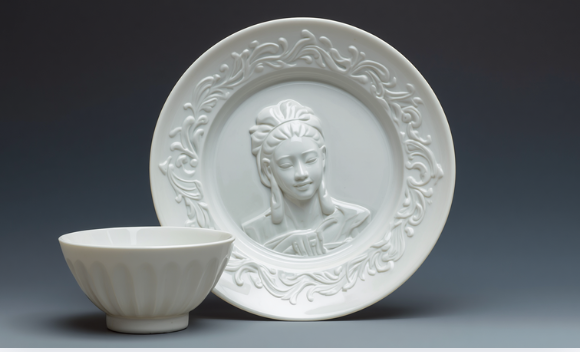
Porcelain is used in far more places than many people realize.
Tableware
This is the most familiar category in American homes. Plates, bowls, tea cups, saucers, serving dishes, and formal dinnerware are often made from porcelain or fine china.
Decorative Objects
Porcelain is also popular for figurines, vases, ornaments, and art pieces because its fine white body and elegant finish make it visually appealing.
Technical and Industrial Uses
Porcelain is not only about beauty. It is also used for electrical insulators, laboratory ware, and other applications where hardness, heat resistance, and material stability matter. (Wikipedia)
That wide range of uses shows just how versatile porcelain really is.
What Is the Difference Between Porcelain and Bone China?
This is one of the most common points of confusion.
Bone china is a specific kind of china made with bone ash or calcium phosphate and is known for whiteness and translucency. It belongs in the broader family of china but is not exactly the same as every other type of porcelain. In practical buying language, both porcelain and bone china may be grouped under elegant tableware, but technically bone china is its own category. (Merriam-Webster)
In simple terms:
- Porcelain is the broader classic material category
- Bone china is a specialized translucent white china with bone ash in the body
That is why shoppers sometimes compare the two when choosing dinnerware.
Is Fine China Always Porcelain?
Not every seller uses the term with perfect technical precision, but in general fine china refers to refined tableware made from porcelain or closely related high-quality ceramic bodies. In American consumer language, it usually signals formal or premium ware rather than casual everyday dishes.
So if you hear someone say they inherited “the good china,” they are usually talking about elegant porcelain or bone china tableware, not ordinary ceramic plates.
Why Porcelain Feels So Premium
Porcelain has kept its luxury reputation for centuries for good reason.
It tends to feel premium because it combines:
- A bright white body
- Fine texture
- Elegant finish
- Thin yet strong construction
- Light translucency
- High-fired durability
These traits help porcelain stand out from heavier, rougher, or more visibly porous ceramics. Even when used casually, it often gives a table or display shelf a cleaner, more polished look.
This is also why porcelain is still widely chosen for special occasions, wedding gifts, display cabinets, and upscale place settings.
How to Tell if Something Is Porcelain or Just Ceramic
If you are shopping and wondering whether an item fits the idea of a white vitrified translucent ceramic china, here are a few clues.
Look at the Body Color
Porcelain usually has a whiter body than ordinary pottery.
Check the Surface
It often feels smoother and more refined.
Notice the Weight
Porcelain can feel lighter and finer than chunkier ceramic wares, depending on thickness.
Try the Light Test
Thin porcelain may show some translucency when held up to light.
Read the Product Description
Retailers often label pieces as porcelain, bone china, stoneware, or earthenware.
Of course, not every item makes this obvious at first glance, especially if it is thick, heavily glazed, or mass-produced in a style that hides the body characteristics.
Problem-Solving Tips
1. Use the Word “Porcelain”
If you mean a white vitrified translucent ceramic china, the clearest everyday term is usually porcelain.
2. Use “Fine China” for Tableware Context
If you are talking about dishes, cups, or formal serving pieces, fine china may be the more natural consumer phrase.
3. Do Not Confuse All Ceramics With Porcelain
Ceramic is the big category. Porcelain is the more specific material type.
4. Remember That “China” Is Often a Household Term
In many American homes, people say “china” when they mean porcelain tableware.
5. Check for Bone China if You Want Extra Refinement
If you want a translucent, elegant white tableware material, bone china is another important category to compare.
6. Look for Translucency in Thinner Pieces
Not every porcelain piece will look translucent in thick areas, so thickness matters.
7. Focus on Use
For everyday dishes, decorative vases, or formal table settings, the best material choice may differ even within the china family.
Final Verdict
If you are trying to understand a white vitrified translucent ceramic china, the clearest answer is porcelain. That phrase describes the qualities porcelain is famous for: whiteness, vitrification, fine texture, and translucency.
In everyday American language, china often means porcelain, especially when talking about tableware and decorative household pieces. That is why fine dishes are often called china, even though the technical material name is porcelain.
Once you understand that, the phrase becomes much less confusing. It is not really a strange separate material. It is a descriptive way of talking about one of the most admired ceramic materials in the world.
FAQs
1. What is a white vitrified translucent ceramic china?
It usually means porcelain or fine china, a high-fired white ceramic known for its density and translucency.
2. Is china the same as porcelain?
In most everyday American use, yes. China is commonly used as another word for porcelain tableware or porcelain ware.
3. What does vitrified mean in ceramics?
It means the ceramic has become glass-like and dense during firing, which helps reduce porosity.
4. Why is porcelain translucent?
Its fine, dense, high-fired structure allows light to pass through thin sections.
5. Is porcelain stronger than regular ceramic?
Porcelain is generally harder, denser, and less porous than lower-fired ceramics like earthenware.
6. What is fine china made of?
Fine china is usually made from porcelain or related refined ceramic bodies. Bone china is a specific type that includes bone ash.
7. Is bone china the same as porcelain?
Bone china is related but distinct. It is a translucent white china made with bone ash or calcium phosphate.
8. Why is porcelain called china?
The name comes from the material’s historic association with China, where porcelain was first developed.
9. Can porcelain be used every day?
Yes. Many porcelain products are designed for regular household use, not just formal occasions.
10. What is the easiest term to use instead of this long phrase?
The simplest and most accurate term is porcelain.
Conclusion
The phrase a white vitrified translucent ceramic china may sound complicated, but the meaning is actually straightforward. In most cases, it refers to porcelain, the elegant, high-fired ceramic material long associated with fine tableware, decorative art, and premium household goods.
Its appeal comes from a rare combination of beauty and performance. Porcelain is white, refined, hard, often translucent, and historically admired across the world. That is why it remains one of the most respected ceramic materials today.
So if you were looking for the right word, now you have it. The answer is porcelain, and in everyday American language, that often means china too.
